
Part 1
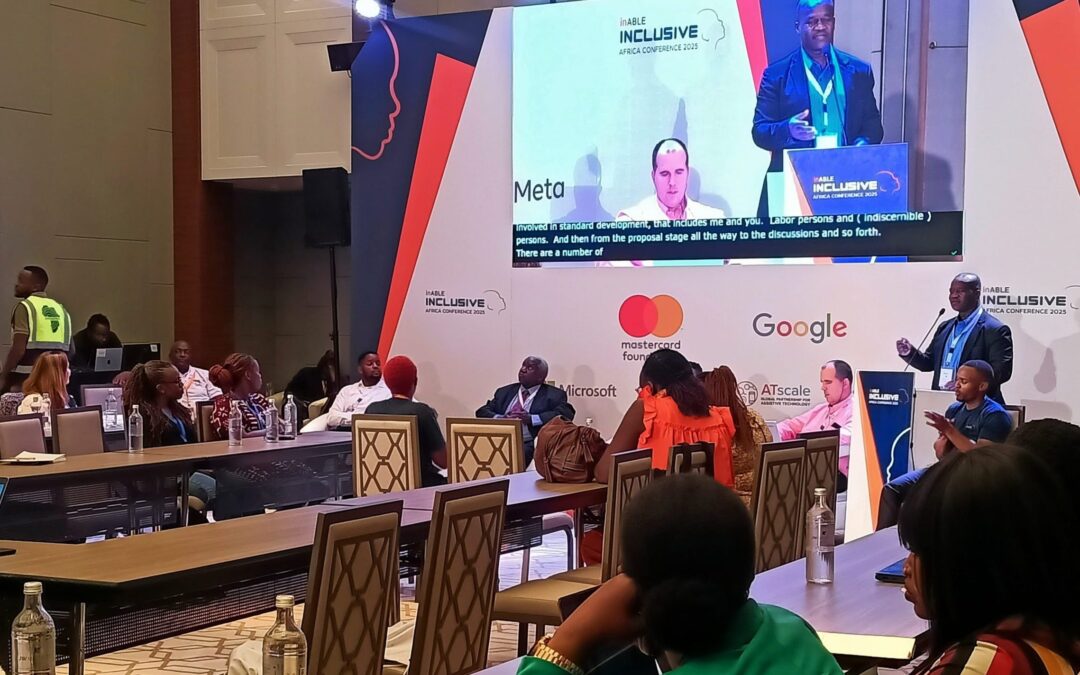
Imagine a world where basic financial transactions – withdrawing cash, applying for a loan, or even just asking a question at the bank – are fraught with anxiety and insurmountable obstacles. This isn’t a dystopian novel; it’s the daily reality for many persons with disabilities navigating Kenya’s financial landscape. This very challenge was a key focus of discussion at one of the insightful sessions attended by the KICTANet Digital Accessibility for Persons with Disabilities team during inABLE’s Inclusive Africa Conference 2025. Despite significant strides in digital transformation, a crucial segment of the population remains on the fringes, excluded from the very systems designed to empower economic growth.
Recent data paints a sobering picture: while 2.2% of Kenyans have disabilities, only a mere 0.5% are integrated into the formal financial system. This isn’t just a statistic; it’s a systemic failure that demands urgent transformation. It highlights a critical oversight in the design and delivery of financial products and services, failing to account for the diverse needs of all citizens. How can a nation truly thrive if a significant portion of its population is locked out of economic participation?
The personal narratives from the conference illuminate the depth of this challenge. One of the participants opined that “Banks often assume that as a person with with autism, I can’t manage my account. They insist on adding a caregiver, stripping away my independence.” Her experience echoes a broader challenge of misconception and limited understanding within financial institutions.
This is the same case with the Deaf community’s struggle with digital financial transactions: “When we send money to the wrong person, we can’t quickly reverse the transaction like hearing people can. We have to wait until morning to resolve it physically.” This exposes critical gaps in the user experience of digital financial products. Additionally, “Whenever a customer with a hearing impairment seeks a business loan, they’re often asked fewer in-depth questions and limited in the loan amount they can receive,” demonstrating a fundamental lack of understanding of the economic potential within the disability community.
The recurring challenges to financial inclusion, as starkly highlighted by the lived-experiences of persons with disabilities and reports like the Scorecard on Accessibility of Government Websites, demand our immediate attention and concerted effort. This is not merely an issue of access, but a fundamental matter of equity and economic empowerment. We urge financial institutions to proactively recognize and cater to the significant economic potential of persons with disabilities, viewing them as a valuable and dynamic market. It is incumbent upon all of us – policymakers, financial service providers, and technology developers – to collaborate in dismantling the systemic barriers that impede true financial inclusion, fostering a society where independence and economic opportunity are universal rights