
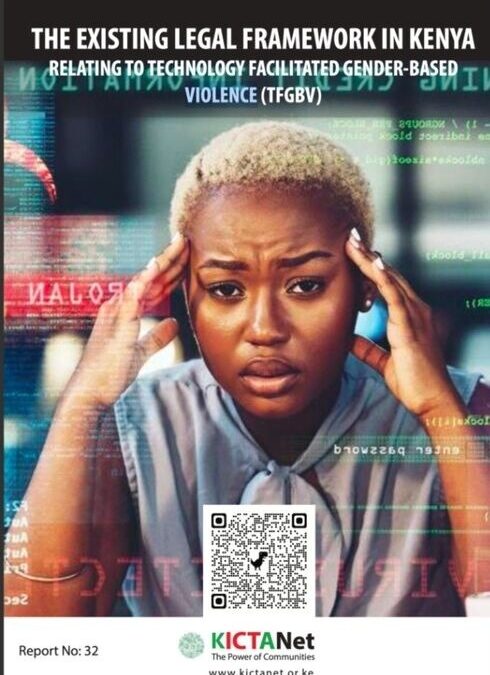
In today’s digital world, where every post, comment, or DM can travel the globe in seconds, Technology-Facilitated Gender-Based Violence (TFGBV) has emerged as one of the most serious threats to online safety—especially for women and girls.
Whether it’s cyberbullying, image-based abuse, stalking, or revenge porn, TFGBV is becoming more frequent and more harmful in Kenya’s digital spaces. While the violence happens online, its impact is very real: survivors face trauma, reputational harm, and even threats to their physical safety.
What Is TFGBV?
The United Nations defines TFGBV as any form of gender-based violence that is “committed, assisted, or amplified” through digital technologies. In Kenya, TFGBV manifests through WhatsApp group harassment, unsolicited nudes, hate speech in local dialects, and harmful political disinformation targeting women and girls.
Recent research by the National Crime Research Centre (NCRC) and Kenya’s Office of the Director of Public Prosecutions (ODPP) reveals that cases of cyberbullying, online sexual exploitation, and distribution of intimate images are alarmingly common.
The Global Urgency
Global bodies like the UN Human Rights Council, the African Commission on Human and Peoples’ Rights (ACHPR), and the African Committee of Experts on the Rights and Welfare of the Child (ACERWC) have repeatedly called on States to address TFGBV through explicit laws and accessible remedies.
In its latest resolutions, the ACHPR noted the disproportionate impact of digital violence on African women and girls—especially through sexualized abuse, hate speech, and online exploitation. The call is clear: States must act.
Kenya’s Challenge
Kenya’s legal framework—anchored in a progressive Constitution and several laws such as the Sexual Offenses Act (2006) and Kenya Information and Communications Act (2013)—offers general protection against digital harm. However, these laws often fall short in explicitly naming or addressing TFGBV.
The current gap lies not only in law but in enforcement, awareness, and cultural context—especially when harmful language is used in local dialects like Ateso to intimidate or shame victims.
Why It Matters for KICTANet and You
As digital spaces expand in Kenya, so do the risks. TFGBV not only violates individual rights—it threatens democracy, public participation, and digital inclusion.
At KICTANet, we believe the fight against TFGBV begins with knowledge, community dialogue, and policy reform. Through our multilingual lexicon project and legal advocacy, we’re spotlighting this issue—and urging action from all sectors.
This is the first in a blog series unpacking key insights from the report. Stay tuned for more posts on Kenya’s legal framework, local language harms, policy gaps, and the tools we need to make our digital spaces safer for all.
Read the full report.