
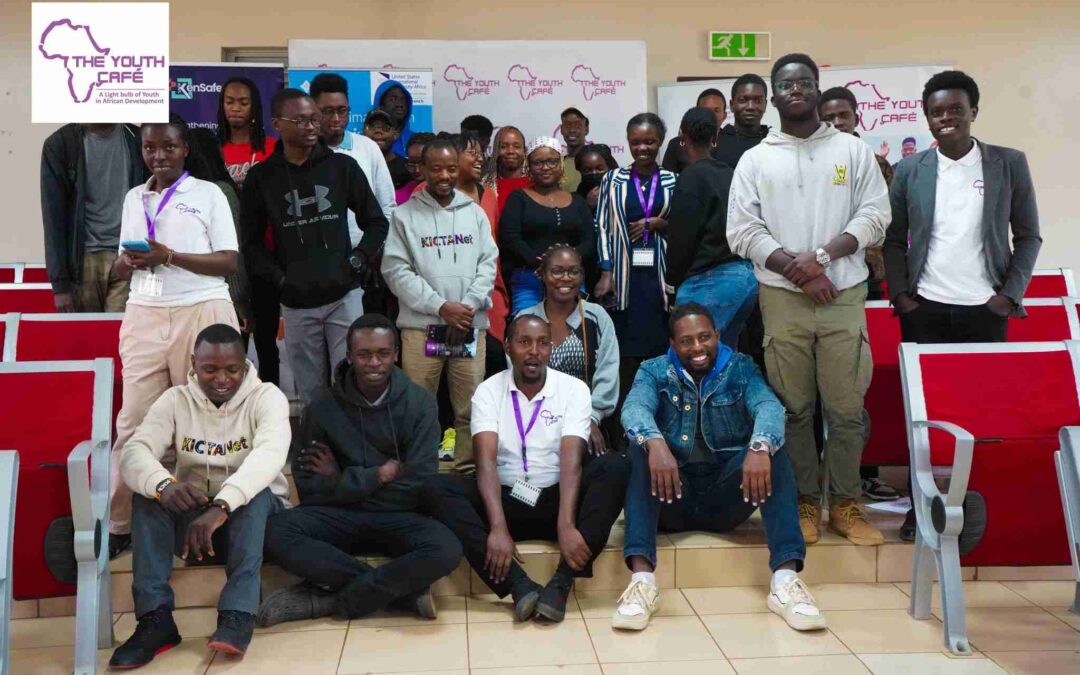
United States International University-Africa (USIU-A) hosted Youth Cafe’s Cyber Rights Campus Connect, a workshop dedicated to educating students on digital safety and cyber law, on July 18, 2025.
Organised by the Youth Cafe, the forum dissected the Computer Misuse and Cybercrimes Act (CMCA) 2018, drawing attention to Sections 27 and 37 — key provisions tackling cyberbullying and digital abuse.
“Many young people are unaware of the legal implications of online offences. Today, we took a bold step in bridging that gap — with thought-provoking dialogue, real stories, and powerful insights,” said Shirley Jemeli, Programs Associate, The Youth Cafe.
With a podcast-style panel and audience engagement, participants left with actionable knowledge and heightened awareness of their digital responsibilities.
Each podcast targets 100-150 on-site students and aims to reach 1,000 online participants via live streaming.
“We envision students as drivers of a safer, more informed digital ecosystem — starting with the legal knowledge they need to protect themselves and advocate for others,” says The Youth Cafe team.
“This is much needed at a time when young Kenyans engaging in online civic discourse face increasing threats from digital harassment, cyberbullying, and the non-consensual sharing of intimate images.”
About Cyber Rights Campus Connect
The initiative was the winning solution from the KICTANet–KenSafeSpaces Policy Hackathon, where The Youth Cafe emerged as a leading voice in youth-centred digital advocacy.
Their concept — Cyber Rights Campus Connect — aims to host on-site, interactive podcasts across three institutions in Kiambu County – Kenyatta University, Jomo Kenyatta University of Agriculture and Technology (JKUAT) and Kiambu Institute of Science and Technology- driving meaningful conversations around legal frameworks and digital rights directly to student communities.
Cyber Rights Campus Connect is anchored within the broader Kenya Safe and Inclusive Digital Space (KenSafeSpace) Action — a European Union-funded initiative implemented by Internews, Internet Without Borders (IWB), and KICTANet.
The project strengthens the voice, capacity, and influence of Kenyan human rights organisations to advocate for a safe, democratic, and inclusive digital ecosystem.
In pursuit of this goal, the consortium works closely with civic and youth-driven entities, including the Bloggers Association of Kenya (BAKE), Tribeless Youth, Mzalendo Trust, and Watoto Watch Network (WWN).
Together, these actors are promoting digital literacy and addressing the growing demand for responsible online spaces in Kenya and across the continent.