
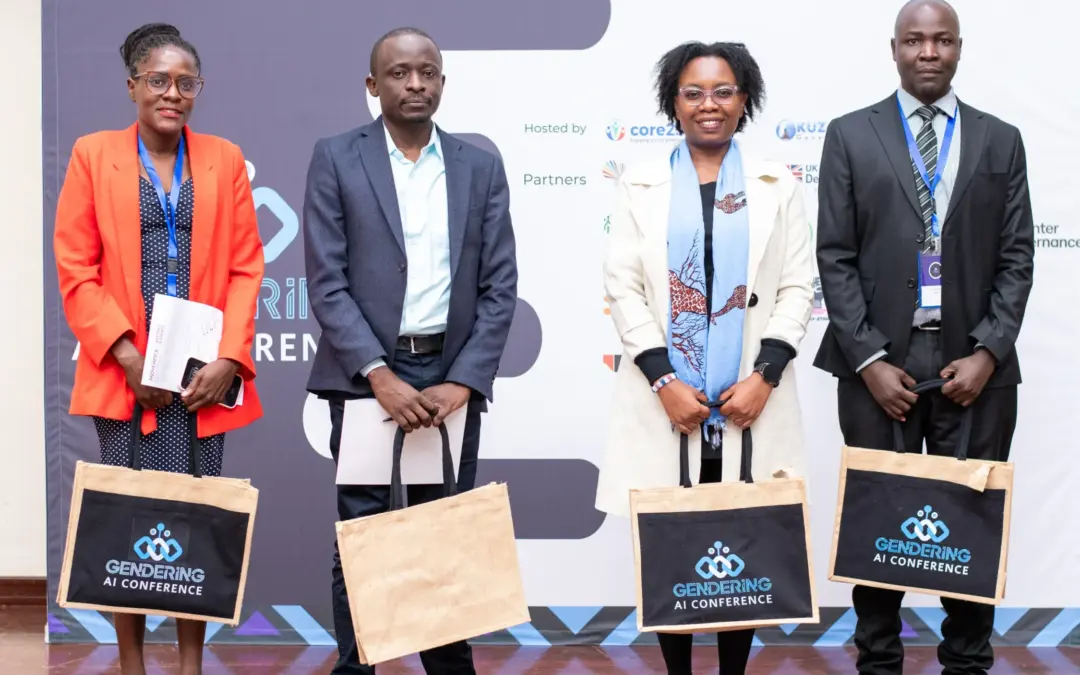
At the heart of this dialogue was an urgent question: Is AI truly neutral, or does it risk deepening existing societal inequalities, especially through persistent gender bias? KICTANet hosted a discussion on “Gendered Realities in AI: Who Builds, Who Benefits, Who is Left Behind?” at the Gendering AI Conference. The session explored the intricate ways Artificial Intelligence (AI) shapes critical decisions, while shining a light on whose voices and experiences are represented; and whose are missing, in the design and deployment of these technologies.
AI in Africa
AI is no longer futuristic; it is shaping lives right now. From health diagnostics to policymaking, AI influences outcomes in ways that can uplift communities or further marginalise those already disadvantaged.
The session emphasised that AI systems are only as unbiased as the data and people behind them. When those crafting AI tools overlook African women and gender-diverse communities, we get systems that do not reflect their realities, thereby reinforcing exclusion rather than dismantling it.

Key Insights from the Conversation
1. Data Representation Matters
AI fundamentally relies on data, and when datasets exclude or misrepresent women in Africa, especially those from diverse backgrounds, the resulting algorithms embed those blind spots. This leads to technology that does not “see” or serve many users fairly. For example, healthcare AI might fail to account for gender-specific symptoms, while law enforcement AI might overlook certain communities.
2. The Digital Divide is Real—and Widening
Despite strides in mobile phone access, Africa remains the only continent where the digital gender gap has expanded in recent years. Women, especially those with disabilities and in rural areas, face layered barriers that limit their access to digital tools, cutting them off from the benefits AI can offer.
3. Educational Barriers Perpetuate Gender Gaps
STEM education remains male-dominated. Fewer women in computer science and AI development mean a narrow pool of perspectives shaping future technologies, often unintentionally encoding gender bias into AI systems. Changing this requires intentional and systemic educational reforms.
4. Language and Cultural Representation Cannot Be Overlooked
KICTANet’s lexicon project, which develops language tools in local African languages to detect technology-facilitated gender-based violence (TFGBV), exemplifies how culturally grounded AI solutions can expand digital inclusion. Addressing language diversity is essential for AI to be accessible and effective.
Building a Fair AI Ecosystem
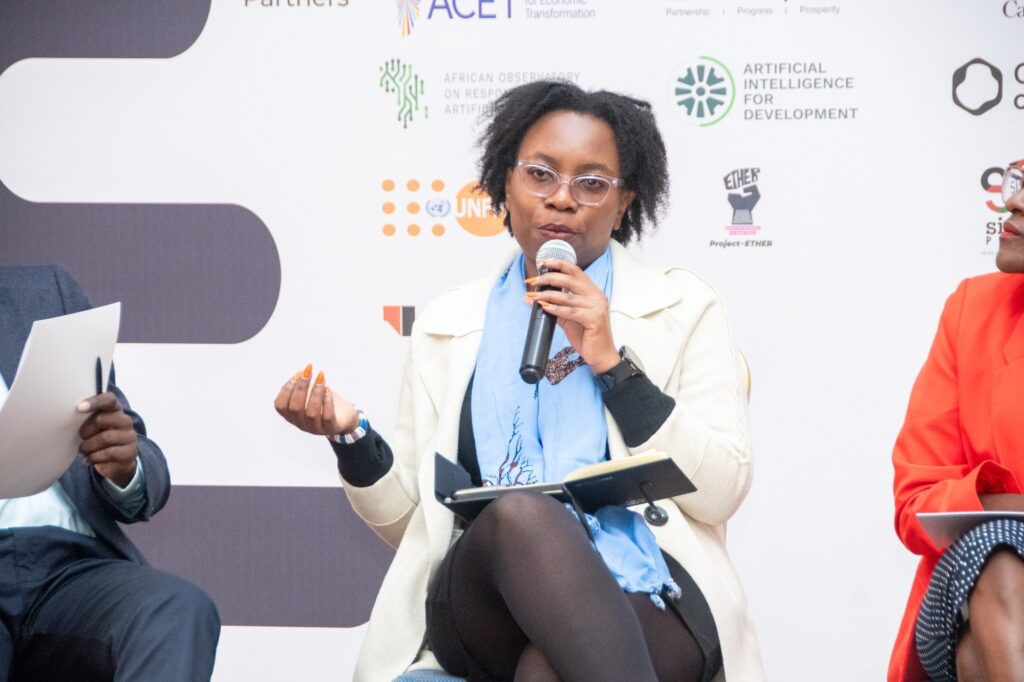
The panel emphasised the urgent need to build a fair and inclusive AI ecosystem that foregrounds justice and representation. A key step involves diversifying AI research to go beyond the narratives dominated by global tech giants. Instead, research should focus on how AI impacts grassroots communities, local enterprises, and the diverse labour markets of Africa. This approach ensures that AI technologies are relevant and responsive to the realities of the people they serve.
Equally important is breaking down social norms that discourage girls and women from pursuing careers in technology. From early childhood, societal stereotypes often limit participation in STEM fields, and these biases extend into formal education systems. Overcoming these barriers requires intentional changes to educational curricula, community attitudes, and support structures to nurture gender-inclusive environments that empower future generations.
Innovative data collection methods are also crucial to challenge the misconception of Africa as a “data desert” and advance data sovereignty by enabling communities to own and shape their data ecosystems. Organisations like KICTANet are leading efforts like the crowdsourced OGBV map. Universities, too, play a pivotal role by democratizing AI literacy. Programs such as the Open University’s generative AI course equip diverse populations not only with technical knowledge but also with creativity and problem-solving skills essential for local AI innovation.
Finally, the panel called for stronger policy advocacy and representation of African voices in global AI governance. Engaging actively in international dialogues ensures that policies reflect local contexts and needs. To move forward, the panel recommended integrating AI education from early childhood, creating inclusive policies in education and workplaces, expanding opportunities for women and gender-diverse individuals, investing in localized data initiatives, and promoting data sovereignty. This collective effort from communities, academia, and governments is vital to foster an equitable and inclusive AI future for Africa.
Moderator: Dr. George Musumba, DeKUT
Panellists: Liz Orembo (Research ICT Africa), Florence Awino (KICTANet), Ronald Ojino (Open University)