
By, Neema Mujesia
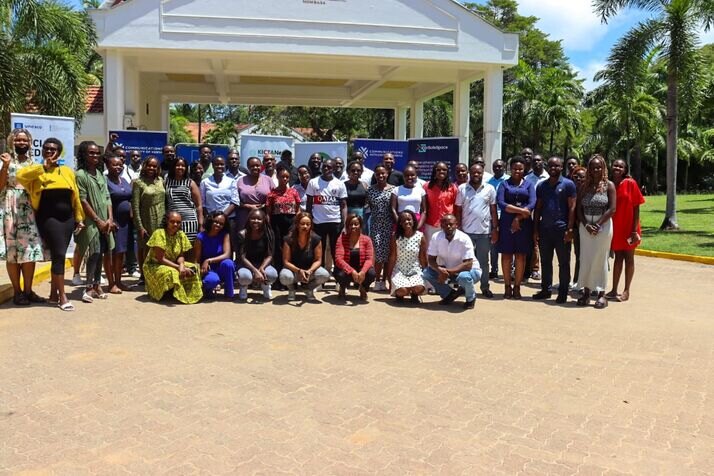
Mombasa, Kenya — Over 50 digital rights stakeholders from across Kenya convened for the SM4P (Phase II)/KenSafeSpace Workshop, a four-day forum held from 9–12 September 2025 in Mombasa County. Hosted by Internews, KICTANet, and UNESCO with support from the European Union, the workshop focused on strengthening governance, safeguarding freedom of expression, and mitigating online harms in Kenya’s rapidly evolving digital landscape.
The event brought together members of the National Coalition on Freedom of Expression & Content Moderation (FeCoMo) and KenSafeSpace civil society networks to address urgent challenges such as cyberbullying, disinformation, and technology-facilitated gender-based violence (TFGBV). Participants were equipped with tools to advocate for rights-based digital policies and protect vulnerable communities.
“Our digital spaces are powerful arenas for civic participation, but equally vulnerable to exploitation,” said Abraham Marita, Project Director at Internews.
Victor Kapiyo, Programmes Lead at KICTANet, added, “It is no longer enough to identify harms; we must co-create policies that are rights-based and contextually grounded in Kenyan realities.”
Key Outcomes and Highlights
- Policy Hackathon Impact
A national Policy Hackathon engaged 141 teams from 43 counties, culminating in 3 winning proposals that showcased innovative, community-driven solutions for digital safety and governance. - Regulatory Clarity & Accountability
Rosemary Mwangi of the Communications Authority of Kenya likened regulation to a household: “Children must adapt to the rules, just as platforms must adapt to frameworks that ensure safety and accountability.”
John Okande of UNESCO reminded participants that “information is a public good. We must safeguard freedom of expression while ensuring inclusivity and access.” - Media as a Civic Bridge
Jacob Nyongesa of the Media Council of Kenya emphasized the media’s role in translating complex policy into public understanding: “Media is the bridge between policy and the people.” - Intersectional Protection & Advocacy
The workshop spotlighted the disproportionate impact of online abuse on women, youth, LGBTQI+ persons, and persons with disabilities, calling for survivor-centered, systemic responses to TFGBV. - Tools for Monitoring & Action
Participants explored platforms like Phoenix for real-time monitoring of digital harms and reviewed Kenya’s Social Media Monitoring Guidelines and National Action Plan Against Hate Speech. - Global-Local Synergy
Drawing from UNESCO’s Guidelines for the Governance of Digital Platforms, the workshop emphasized multistakeholder collaboration, media literacy, and regulatory innovation tailored to Kenya’s digital realities.
“Governance of digital platforms must reflect human rights, protect the vulnerable, and foster innovation,” said Dr. Grace Githaiga, Convenor at KICTANet, capturing the workshop’s unified call to action.
The forum concluded with a renewed commitment to champion safe, inclusive, and rights-based digital spaces in Kenya—setting the stage for stronger advocacy, resilient networks, and a digital ecosystem that upholds both democracy and human rights.
READ: Safeguarding Kenya’s Digital Space: Insights from the SM4P Phase II and KenSafeSpace Workshop