
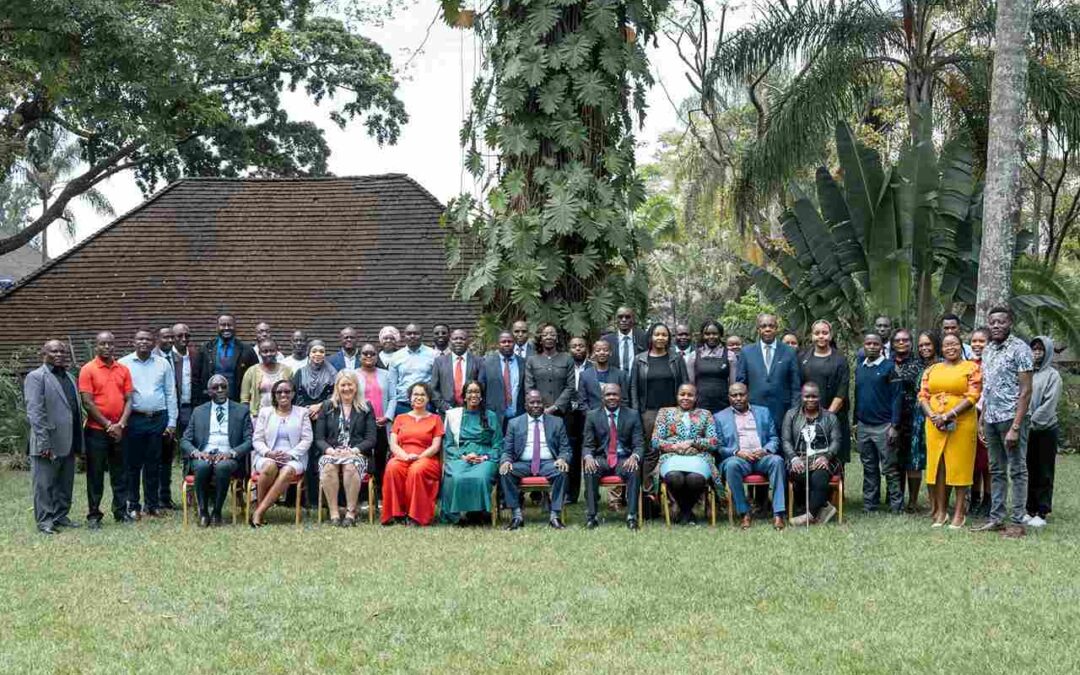
At the 2025 International Day for Universal Access to Information (IDUAI), KICTANet joined national and global voices to spotlight the transformative power of digital access; especially in tackling environmental challenges. This year’s theme, “Ensuring Access to Environmental Information in the Digital Age,” resonated deeply across Kenya, where climate-smart agriculture, clean energy, and urban resilience depend on timely, credible data.
The Nairobi event was jointly convened by Katiba Institute, The Media Council of Kenya, and the Commission on Administrative Justice.
Why Access to Information Matters
“Access to information is not a privilege. It’s a right that underpins transparency, participation, and good governance,” said PS Eng. John Tanui, Principal Secretary for ICT and the Digital Economy. He highlighted Kenya’s strides in digital infrastructure, including over 84,000 kilometers of fiber and the rollout of 1,450 digital hubs nationwide. These hubs are designed to empower citizens with digital skills and bridge the information divide.
KICTANet’s Communications Officer David Indeje joined a panel to unpack how digitalisation is reshaping access to environmental data. “We must strengthen digital infrastructure, boost digital literacy, promote open data, and encourage multistakeholder collaboration,” he said.
Indeje referenced KICTANet’s recent study, “Digitalisation and Climate Change: Connecting the Two Agendas for a Just Climate Transition,” which calls for inclusive policies that promote climate resilience while addressing inequalities.
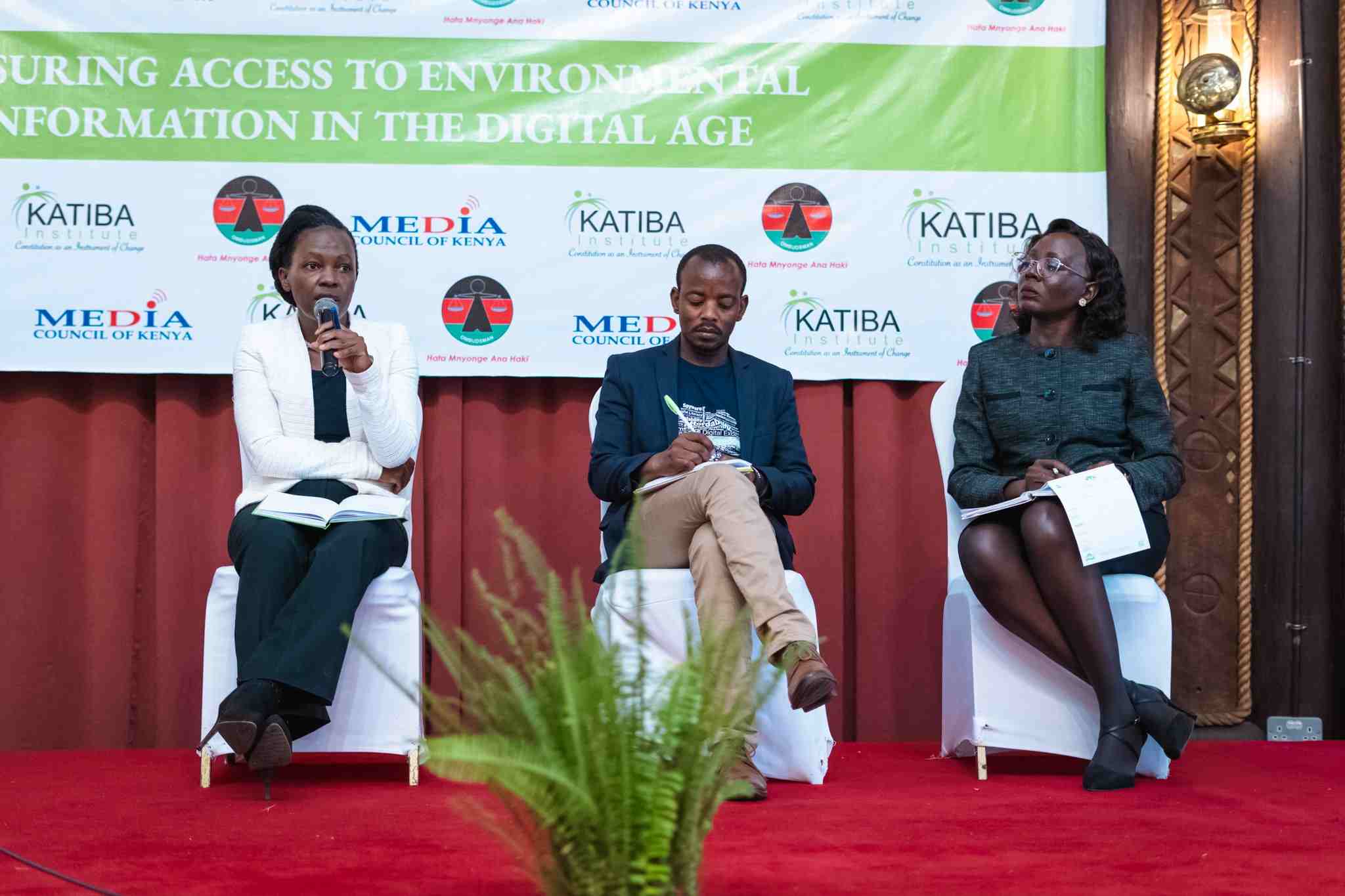
Ms Patricia Joseph (Katiba Institute), David Indeje (KICTANet), and Ms Viola Ochola (Commission on Administrative Justice) discuss opportunities, challenges, and future directions for access to information in the digital age during IDUAI 2025.
From Climate Data to Community Impact
For rural communities, access to environmental information isn’t abstract—it’s survival. “When it rains, when to plant, when to harvest. This is the kind of data that matters most,” said David Omwoyo, CEO of the Media Council of Kenya. He urged journalists to go beyond event coverage and deliver practical, localized information that helps Kenyans make informed decisions.
Norah Mbagathi, Executive Director of Katiba Institute, emphasised the constitutional weight of access to information: “Without it, we cannot challenge violations or prevent harm; especially environmental harm, which is often irreversible.” She called for proactive disclosure by government agencies and praised counties that respond to information requests in a timely and transparent manner.
Opportunities and Challenges in the Digital Age
Kenya’s mobile-first population and growing smartphone penetration offer immense potential for digital inclusion. But challenges persist: misinformation, uneven internet access, and weak enforcement of digital rights threaten equitable access.
KICTANet and partners are working to close these gaps by:
- Advocating for open data and transparency in climate-related information
- Training communities and officials on how to use the Access to Information Act
- Promoting digital literacy and rights awareness
- Collaborating with government and tech partners to unlock innovation
AI, Data Governance, and the Future
Kenya’s new National AI Strategy (2025–2030) and upcoming Data Governance Framework aim to make environmental data interoperable and usable for citizens, researchers, and innovators. “Data is now a key resource—like land or capital,” said PS Tanui. “We want citizens to innovate, create enterprises, and develop products using open data.”
He also announced a partnership with Meta to develop an AI tool focused on public sector transparency, inviting civil society—including KICTANet—to co-create solutions that improve access to government programs and services.
As Kenya digitizes, the stakes are high. Access to environmental information must be timely, inclusive, and actionable. “Let’s use this day to deepen our efforts towards equitable, transparent, and climate-informed digital access,” said Indeje.
From fiber optics to AI, from grassroots training to policy reform, KICTANet’s participation at IDUAI 2025 underscores a simple truth: access to information empowers people. And in the face of climate change, it could mean the difference between resilience and vulnerability.