
Every data point on online gender-based violence (OGBV) represents a lived experience. This collection of human impact stories brings those experiences to light; amplifying the voices of survivors and individuals empowered through KICTANet’s training and capacity-building initiatives. Through their personal journeys, we uncover the real-world challenges of navigating digital spaces, the resilience it takes to stay safe, and the transformative power of support, knowledge, and community. These stories are not just testimonials. They are reminders that every policy, program, and platform must center the people it serves.
These stories were shaped through thoughtful, survivor-centered research. KICTANet collected the narratives in this report using a blend of structured questionnaires and in-depth interviews. The questionnaires captured insights from survivors of online gender-based violence (OGBV) and participants in KICTANet’s digital safety and empowerment programs. One-on-one interviews allowed for deeper exploration of personal experiences, challenges, and resilience. Each account was carefully drafted and compiled by Florence A. Ouma, Program Assistant Gender & Digital Accessibility and Cherie Oyier, Programs Officer-Women’s Digital Rights, KICTANet to reflect the lived realities behind the data—ensuring that every story is both authentic and impactful.
Ivy Kinuthia on Law, Digital Safety, and Creating Safer Online Spaces
As an advocate of the High Court of Kenya and an experienced researcher, Ivy Kinuthia has spent much of her career at the intersection of law, technology, and human rights. She has worked on projects covering technology-facilitated gender-based violence (TFGBV), data protection, and digital inclusion. Her expertise has positioned her not only as a legal professional but also as a thought leader in shaping safer digital futures for women and marginalised groups.

Ivy Kinuthia reflects on law, digital safety, and the personal cost of self-censorship online
When she reflects on the training she attended, Ivy says what stood out most was the breadth of knowledge and collaboration.
“The team was so knowledgeable, and the network was broad. You’d hear from so many different partners. The sessions broke down complex topics so succinctly. They were also fun and great for networking. Some of the people I met there ended up supporting our work later on.”
Yet, despite her legal training and professional awareness, Ivy admits her personal relationship with online spaces has been shaped by caution.
“Initially, I thought I hadn’t experienced TFGBV,” she explains. “But I realized it’s because I self-censor. I rarely post online because of what I’ve seen others go through. It protects me, but it’s not a solution. It silences my views, and that’s sad.”
For Ivy, self-censorship is both a shield and a loss. Without the threat of online harassment, she believes her online persona would be completely different: more open, more expressive, less guarded. “We shouldn’t have to choose between safety and expression,” she adds.
Her research has further deepened her perspective. Through interviews with survivors, influencers, and fellow lawyers, she has seen firsthand how widespread TFGBV is and how often it goes unrecognised.
“What struck me most was that many people don’t even realize certain behaviours amount to technology-facilitated violence. The stigma is huge, and yet offline behaviours are mirrored online. The opposite is also true: positive behaviour offline can influence better online conduct. Awareness is the missing link.”
When asked about legal remedies, Ivy is clear: victims should always pursue avenues for justice where possible.
“If there’s a legal channel, use it. Even if it’s to teach someone a lesson, it helps prevent harm to others. The more cases are reported, the more visible this issue becomes. If we keep silent, it’s not seen as a priority, but in reality, it can turn people’s lives upside down.”
Still, she acknowledges the barriers victims face, especially in police stations.
“The feedback about the police response has been terrible. Victims are often trivialized or turned away. It’s already hard to report, and then to be dismissed? That pushes many to give up. The police need training. If they can change in other areas, they can change in this too. Women spend so much time online, we need to feel safe in those spaces.”
For Ivy, creating safer digital environments is not just about frameworks and institutions. It’s also about individual responsibility.
“Sometimes we think it’s about others, but we forget how we perpetuate harm to ourselves. Even if you don’t post, what you say in the comments matters. Those spaces can fuel TFGBV, or they can shut it down. Each of us has a role to play.”
Her message is simple yet powerful: safer online spaces require collective effort from lawmakers and platforms to police officers and everyday users.

Photo by Katie Rainbow 🏳️🌈: https://www.pexels.com/photo/colorful-cutout-balloons-on-black-background-8504373/
Speaking for Change: Felix Ochieng’s Fight Against Online Harassment in Mathare
Growing up in Nairobi’s Mathare settlement, Felix has always understood what it means to live with resilience. Today, that resilience is tested in new ways, online. As an active participant in community training on gender-based violence, Felix has long been committed to creating safer spaces. His advocacy is both professional as it is deeply personal.
“I’m part of the queer community,” he explains. “And for us, online harassment is almost inevitable. People use our photos without permission, share them around, or even blackmail us. Sometimes you trust someone, and later find that they secretly recorded you. Before you know it, you’re exposed online.”
For queer Kenyans like Felix, the consequences of such exposure can be devastating. In a society where stigma and discrimination remain widespread, the threat of being outed online can lead to self-censorship, fear, and even physical danger.
Despite these risks, many survivors find little support. Felix has reported incidents to organisations that work with LGBTQ+ communities, but he says psychosocial help is almost nonexistent.
“If I had to rate mental health support, I’d give it a two out of ten,” he says. “Even when services exist, stigma makes people afraid to come forward.”
The challenges extend to formal justice systems. Reporting to the police often results in mockery rather than protection.
“As a man, when I reported harassment, they laughed and asked if men could really be victims,” he recalls. “That kind of response makes you think twice before ever reporting again.”
But instead of retreating, Felix has developed his own strategies. Confronting perpetrators directly, he explains the legal consequences of their actions. Surprisingly, some back down once they realise the seriousness of what they are doing.
“Education works,” he reflects. “When people understand their actions have legal weight, many change their behaviour.”
What’s missing, Felix argues, are structured training that directly addresses online gender-based violence. While he has attended general security workshops, very few programs prepare people for the specific realities of online harassment targeting queer communities.
Still, Felix refuses to give in to despair. For him, healing means breaking the silence, creating a society where survivors of online abuse can report without shame, access real mental health support, and reclaim their digital spaces without fear.
“I don’t want people to suffer quietly,” he says. “With the right knowledge and support, we can all live safer, freer lives online.”
Faith Karori on Navigating Social Media
For Faith Karori, storytelling has always been second nature. As a writer and digital creative, she has spent years observing how online spaces shape conversations in Kenya. But unlike many of her peers, she has chosen to participate from the sidelines.
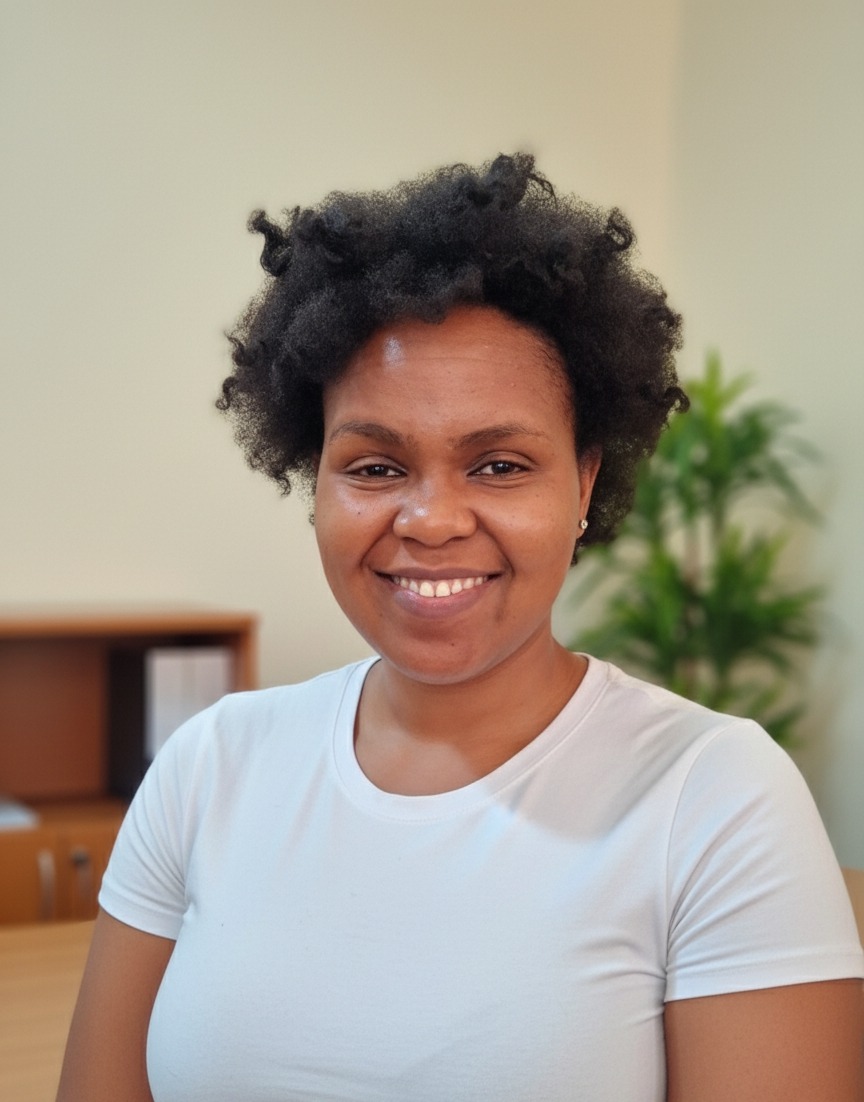
Faith Karori shares how online harassment reshaped her digital presence and creative expression
“I live on social media,” she admits with a laugh, “but I don’t post much any more.”
Her decision was not random. In her university years, Faith was an active poster—sharing her thoughts, photos, and experiences freely. But that openness came at a cost. Strangers left hurtful comments, and some dug up years-old posts only to add insults. What began as an outlet for expression soon became a source of anxiety.
“I used to love posting,” she recalls, “but I realized that people you don’t know can still come at you. Even a harmless, seven-year-old post would get a nasty comment. I just decided it wasn’t worth it.”
Today, Faith describes herself as a “passive user” scrolling, observing, but rarely putting herself out there. Most of her accounts are private. “By the time you see what I share,” she says, “it’s because I’ve chosen to let you in.”
Her cautiousness reflects the toxic potential of technology-facilitated gender-based violence. Faith has never been personally targeted in the extreme ways others have, but she has witnessed plenty—from AI-manipulated images to coordinated online harassment.
“One of the posts that really stuck with me,” she explains, “was when someone’s picture was taken and altered using AI to strip off their clothes. It shook me, because it could be anyone. It could be me. That possibility is terrifying.”
Still, Faith hasn’t abandoned online spaces entirely. Instead, she has adapted. She manages her digital presence carefully, curating who can access her content and blocking negativity quickly. “The peace that comes with that is unmatched,” she says. “It’s liberating to decide who can and cannot interact with me.”
But this cautious approach hasn’t been without consequences. As a writer, Faith has lost professional opportunities.
“When I used to post, I got more gigs,” she admits. “People could see my work and engage with it. Now, I overthink every post. Sometimes I write something, but I just delete it. The fear of being misunderstood or attacked is real.”
To cope, Faith has created an alter ego of sorts—an online persona that only shares about music. “It’s easier that way,” she says. “People can engage with the music I love, without turning it into a personal attack.”
The turning point for Faith came when she attended training on technology-facilitated gender-based violence (TFGBV). For her, the most empowering lesson was language.
“Before, I could sense something was wrong online, but I didn’t have the words for it,” she says. “Now I know what doxxing is, what revenge porn is, what digital stalking looks like. Naming these harms makes them real, and it gives us the power to confront them.”
These trainings also introduced her to reporting mechanisms and laws protecting digital users. “It’s not just about strong passwords,” she notes. “It’s about knowing you can report abuse, that there are laws you can rely on. That knowledge takes away some of the fear.”
Despite the risks, Faith insists that people should not allow themselves to be silenced. “Harassers want you to stay quiet,” she says firmly. “They want to shame you into disappearing. But there are people and communities ready to stand with you, to give you tools and support. You don’t have to live in fear.”
For Faith, healing doesn’t mean a perfect internet, free of cruelty. It means a culture shift where disagreement doesn’t have to turn into dehumanisation, and where freedom of expression is exercised with dignity.
“You can oppose someone’s opinion without attacking who they are,” she reflects. “That’s the internet I want to be part of.”
Zipporah Kamau on Resilience, Healing, and Standing Up to Online Gender-Based Violence
As the founder of We Believe Community Organisation in Kabete, Zipporah Kamau has built her life around empowering women and girls. Her work spans sexual and reproductive health, leadership training, STEM education for girls, and advocacy against gender-based violence.
But for Zipporah, the fight for safer digital spaces is deeply personal.

Zipporah Kamau turns political cyberbullying into a mission for digital safety and healing
In 2022, while vying for a political seat as a Member of County Assembly, she became the target of an orchestrated online smear campaign. Fake, photoshopped images portraying her in compromising situations circulated widely in WhatsApp groups created solely to discredit her.
“The anxiety was overwhelming,” she recalls. “For three weeks, I couldn’t campaign. I didn’t even leave the house. Every day, I woke up afraid of what new rumour would come up.”
The abuse was not just online; she also endured physical violence during the campaign. Yet the response from authorities was disappointing. “When I reported, the police told me to just leave the platforms,” she explains. “They didn’t even try to follow up with the perpetrators.”
Instead of giving up, Zipporah channelled her pain into action. Today, she trains women and girls on online safety, from setting strong passwords to handling cyberbullying.
“I wish someone had prepared us before we entered politics. Now, I make sure other women know what to expect and how to protect themselves. When women hear my story, they realize they are not alone. That empathy makes a difference.”
Beyond the political fallout, the experience took a toll on her mental health. “It felt like a death sentence,” she admits. Therapy, prayer, and spending time in open spaces became her lifeline.
“Therapy saved me,” she says, though she acknowledges that for many survivors, it’s unaffordable. “Sessions cost 3,000 to 5,000 shillings. Most women in rural areas cannot access that. We need to make healing accessible.”
Her organisation now integrates mental wellness into all its programs. Whether in leadership trainings or STEM sessions, women are encouraged to share openly in safe spaces. For Zipporah, healing is not about forgetting but about reclaiming power. In the process, she has also discovered new strengths.
“Healing looks like being able to speak up, to share my story without shame, and to change someone else’s life in the process. Despite the harm, I still believe the internet is powerful. It has connected me to women leaders across the world and opened doors I never imagined.”
Her resilience has carried her far. She has represented Kenya at the Vital Voices Global Partnership in Washington, D.C., and joined the #MeToo Movement’s Pan-African initiative, where she pushed for technology-facilitated violence to be recognised as seriously as physical abuse.
Zipporah acknowledges the contradictions of digital spaces. “Yes, the internet can harm. But it can also build communities, amplify voices, and create opportunities,” she says. She encourages women not to retreat online. “The digital space has given me visibility, connections, and even financial growth. We shouldn’t abandon it—we should claim it.”
Maria Muneeni on Law, Disability, and Building Shields Against Online Violence
As a lawyer-in-training and co-founder of Shield Maidens, Maria Muneeni has positioned herself at the intersection of law, technology, and advocacy for women and persons with disabilities. Currently undertaking her Advocates Training Program at the Kenya School of Law, she is already carving a path that blends legal expertise with digital safety awareness.
Her first brush with digital threats came via Instagram. A message from what appeared to be a trusted friend promised her a phone and cash if she clicked a link. The incident left her shaken, but also sharpened her instincts.
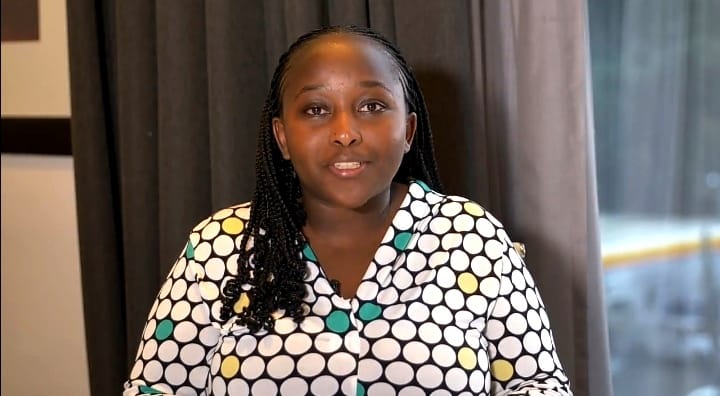
Maria Muneeni advocates for accessible digital safety training for persons with disabilities
“I thought it was real,” Maria admits. “Thankfully, I had already set up two-factor authentication. I blocked the account, logged out, and called my friend only to learn he had been hacked weeks earlier. I became very anxious about links. I delayed sharing my location online, removed my phone number from old accounts, and locked down my privacy settings,” she says. “It was about regaining control.”
Her advocacy also highlights the layered vulnerabilities faced by persons with disabilities. “They are at greater risk,” she explains. “Someone visually impaired, for instance, may not detect whether a link is encrypted. Many are not tech-savvy, yet social media is central to their work and self-expression. The risks are higher, and the support is not always accessible.”
For Maria, police responses remain one of the biggest barriers. “Most officers dismiss online abuse as unserious. They’ll say, ‘Basi usitumie social media.’ But for many, social media is not optional; it’s their livelihood or their voice.”
This is why trainings like those she has attended with KICTANet stand out. “I really valued the sessions, especially the digital storytelling and youth policy forums. They were accessible, interactive, and practical. But we need more sessions tailored specifically to persons with disabilities; simplified language, practical examples, and venues with full accessibility.”
For Maria, safer digital spaces will require both systemic change and individual responsibility. Legal frameworks, training for law enforcement, and accessible reporting channels. All are critical. But so too is the everyday kindness of users who choose to uplift rather than tear down.
“Online violence is real. It can make people dim their light, silence their voices. We must educate ourselves, protect one another, and create supportive online communities. Sometimes it’s as simple as calling out a harmful comment or reporting an abusive account. You’re not just protecting yourself—you’re protecting others too.”
From Survivor to Defender: Beatrice Waithera’s Fight Against Tech-Facilitated Gender Violence in Kenya
When Beatrice Waithera first logged onto Facebook, she thought it was just another digital “yearbook” to keep in touch with friends. Instead, it became her stage for resistance. As a teenage mother turned community journalist, she began posting about the injustices around her; poverty, police extrajudicial killings, early marriages for young girls, and soon, her words were doing more than documenting life; they were shaping it.
Her social media posts struck nerves and sparked conversations. By 2018, Beatrice was among the voices demanding #JusticeForSharon after the murder of Sharon Otieno was linked to a high-profile politician. “We couldn’t allow Sharon to be forgotten,” Beatrice recalls. “Even if we only had two followers, we had to speak.” That online cry grew into a national debate on femicide, inspiring feminist organizing and even university research.
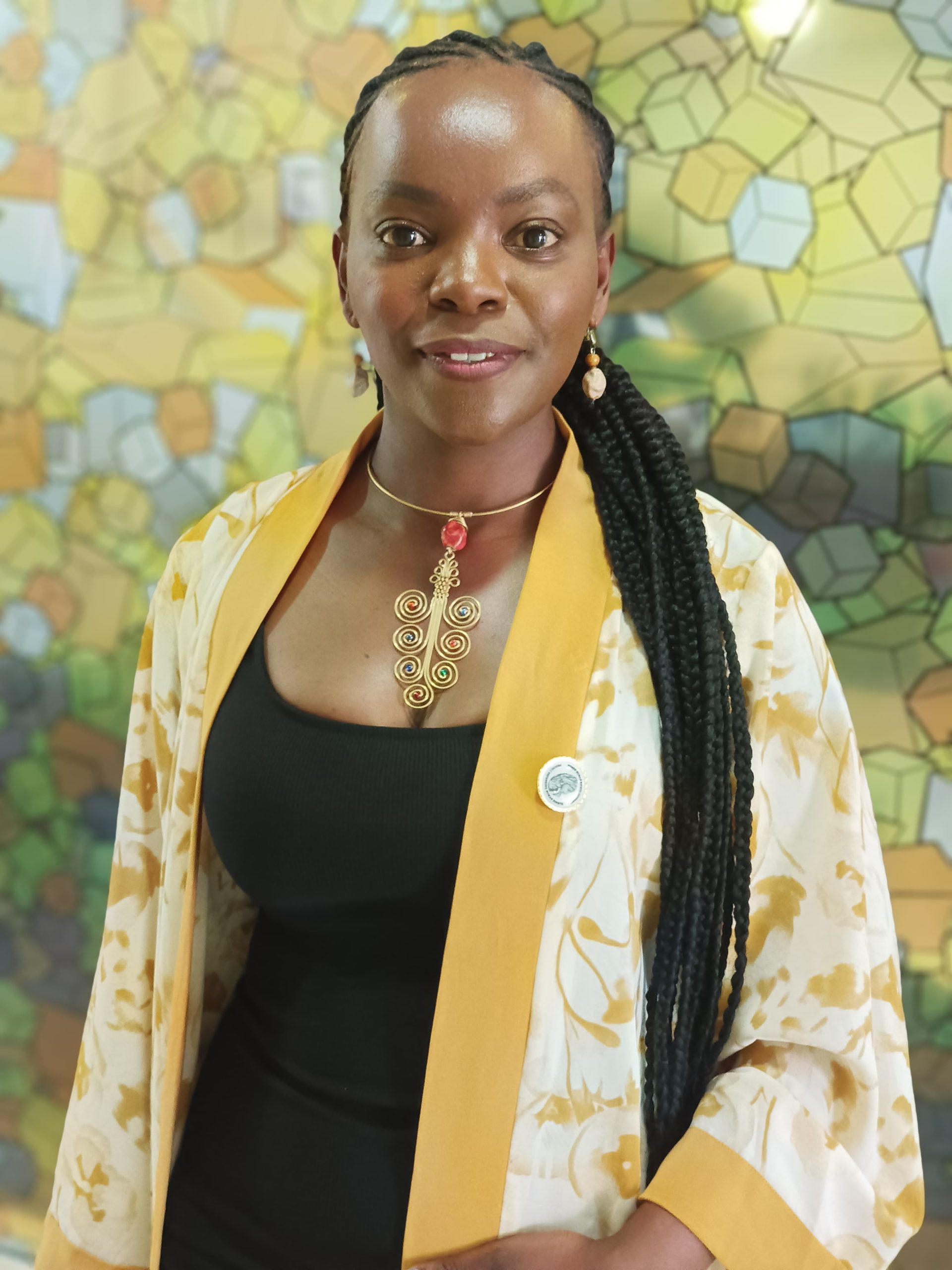
Beatrice Waithera transforms online threats into grassroots digital resilience and advocacy
But visibility came at a price. In 2019, Beatrice co-founded the Red Vest Movement, an anti-corruption campaign that staged simultaneous protests across multiple counties. The movement rattled the establishment, but it also drew trolls, infiltrators, and state surveillance. “One day, I realised one of my online ‘followers’ was actually a soldier tracking me,” she says.
For Beatrice, the attacks weren’t only political, they were deeply personal. Men tried to distract her with fake romantic advances. Trolls body-shamed her, claiming she didn’t look like a “TV girl,” attacks meant to discredit her journalistic credibility. Worse, she received multiple threats of non-consensual sharing of intimate images. Even allies sometimes turned into online aggressors.
“They wanted me to look beautiful in high heels at protests. But how do you face police batons in heels? That was abuse—gendered abuse,” she reflects.
Instead of retreating, Beatrice fought back strategically. She embraced digital literacy and security, training with organizations like KICTANet. She became a digital security defender, teaching women, journalists, and activists how to protect themselves online. At home, she trained her family, starting with her mother, to use encrypted platforms like Signal, understanding that her work could make them targets too.
Her advocacy is inclusive. Inspired by her sister, who has a disability, Beatrice ensures her campaigns are accessible for persons with disabilities. And through her grassroots organization, she equips teenage parents with ICT and e-commerce skills, proving that technology is not just for the elite.
“Technology can open doors for teenage parents, for girls rescued from child marriages, for anyone who dares to dream,” she says.
Beatrice’s journey is a testament to digital resilience. For women like her, surviving online violence isn’t just personal, it’s political. It’s about defending democracy, visibility, and voice.
“Abuse online is meant to silence us. But I refuse to be silent. My voice belongs to every woman who is told she is too loud, too visible, or too strong.”