
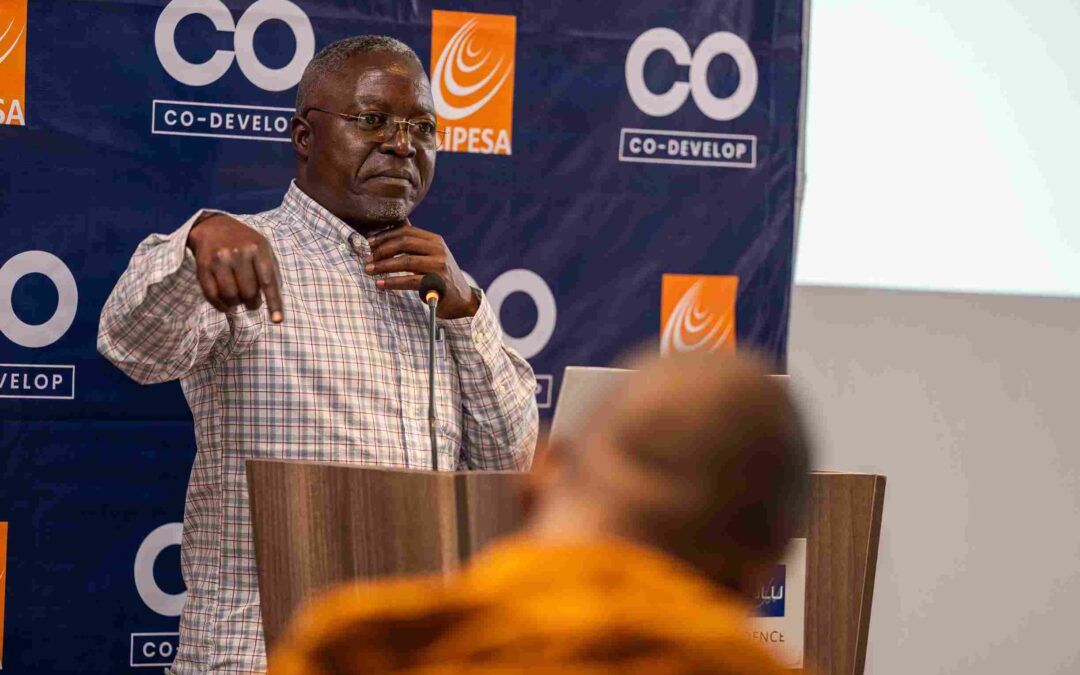
In Nairobi, the conversation around Digital Public Infrastructure (DPI) took a bold new turn, from technical jargon to human impact.
At the launch of Collaboration on International ICT Policy for East and Southern Africa’s (CIPESA) findings on media coverage of DPI in Eastern Africa, journalists, researchers, and digital rights advocates gathered to ask: Are we telling the right stories about Africa’s digital transformation?
The event, held during the Digital Public Infrastructure Journalism Fellowship for Eastern Africa, brought together 20 fellows from Burundi, Kenya, Somalia, Tanzania, DRC, and South Sudan, each equipped to reshape how DPI is reported, understood, and governed.
“Until the lion learns to write…”
Opening the session, Robert Karanja of Co-Develop reminded the room why this fellowship matters:
“Until the lion learns to write his or her own stories, the stories will always glorify the hunter.”
He traced the journey from West Africa’s initial DPI media fellowship to this new East African cohort, emphasising the need for African-led narratives on digital ID, payments, and data exchange.
“We have seen journalists from across the region join this journey. They are not just learning; they are leading.”
Infrastructure with Identity, Inclusion, and Integrity
Dr. Wairagala Wakabi, Executive Director at CIPESA, framed DPI as “the lifeblood of the digital society and indeed an engine for digital economies.” From digital IDs to inclusive payment systems and data exchanges, DPI touches everything from healthcare to climate resilience.
“It is our collective responsibility to ensure that DPIs deliver for everyone, excluding nobody, and being transparent in the ways that they operate,” Wakabi emphasised.
What the Media Gets Right and Misses
CIPESA’s baseline study analysed 680 Digital Public Infrastructure (DPI) and Digital Public Goods (DPGs) related stories published in 28 major outlets across seven countries in 2024.
Key findings include:
- Tanzania (224 stories) and Kenya (199) led in coverage volume, while South Sudan (53) and Rwanda (61) lagged behind.
- Most stories were short, event-driven hard news, triggered by official announcements.
- Government officials dominated sourcing, accounting for over half of all voices.
- Civil society, experts, and citizens were marginal, and men made up 80% of all sources with Ethiopia recording no female voices.
- Coverage focused on digital IDs, payment systems, and online portals, while data privacy, governance, and equity were under-reported.
“Even with standardised definitions, country teams debated whether certain stories were truly about DPI,” noted Dr. Peter Mwesige, lead researcher.
Panel Reflections: Archives, Authority, and Absences
A panel featuring Churchill Otieno (Kenya), Badru Mulumba (South Sudan), and Nadine Kampire (DRC) unpacked the findings with lived newsroom insights.
Otieno lamented the loss of media archives: “When I was running the newspaper, we kept every copy. Now you go to most outlets, there’s nothing. It’s like the media is shedding its memory.”
Mulumba flagged the executive-heavy sourcing: “Everything you read about DPI is coming from the executive or the communications authority. Parliament is missing and that has implications for accountability.”
He also highlighted the gender gap, noting the near absence of female voices in DPI reporting.
Kampire emphasised the need for critical engagement with legislation, participation, and democratic access, calling for more substantive, citizen-centered coverage.
Strengthening DPI Coverage: Benchmarks, Innovation, and Inclusion
In a forward-looking panel, Diana Sanga (Digital Impact Alliance), Victor Bwire (Media Council of Kenya), and Benon Herbert Oluka (Global Investigative Journalism Network) offered a roadmap:
- Anchor reporting in benchmarks: Journalists should align DPI stories with frameworks like the Digital Transformation Strategy for Africa (2020–2030).
“Just like we benchmark ambulance response times, we should ask: what’s the benchmark for digital service delivery?” said Bwire. - Spotlight local innovation: From telemedicine to digital agribusiness, reporters were urged to track grassroots tech that often outpaces policy.
“Innovators are usually ahead of their governments. Journalism should help society catch up,” said Oluka. - Expose infrastructure gaps: Whether it’s exclusion in mobile payments or connectivity deserts, DPI coverage must surface inequities.
“Ask the uncomfortable questions. Who’s being left out?” Bwire challenged. - Invest in media literacy: Sanga emphasised the need to educate the public on what DPI is and why it matters.
“Training journalists is a start. But we also need to build public understanding so citizens can demand better.”
Re-centering the Human Story
Closing the conversation, one speaker offered a reminder:
“We focus too much on the technology and not the impact or the value. We need to shift the perspective to understand the human side of DPI.”
They argued that journalists are uniquely positioned to bridge the gap between technologists, policymakers, and citizens, by telling stories that translate complexity into lived experience.
“People don’t need to understand how an API works. They need to know that DPI helps them access services, send money, or get healthcare faster and cheaper.”