
The Ugandan government has ordered a nationwide shutdown of public internet access and selected mobile services ahead of the general elections scheduled for January 15, 2026.
According to a letter to internet providers by the Uganda Communications Commission (UCC), the shutdown has taken effect today, Tuesday, January 13, 2026, at 6:00 PM EAT, and it is indefinite, or until a restoration notice is issued.
The shutdown includes:
- Suspension of public internet, including mobile broadband, fibre optic, and satellite services (such as Starlink).
- Blocking of Social Media & Messaging platforms e.g, Facebook, X, WhatsApp, and Telegram.
- Suspension of new SIM card sales, registrations, and outbound data roaming to “One Network Area” countries.
- Directives to ISPs to disable mobile Virtual Private Networks (VPNs).
Essential services such as healthcare, banking, and critical government operations are allowed to remain online under strict controls and secure whitelisting.
The UCC stated the measure was a “precautionary intervention” following recommendations from the Inter-Agency Security Committee, saying it is necessary to: curb the spread of misinformation and disinformation, prevent incitement to violence and potential unrest, and protect national security and the integrity of the electoral process.
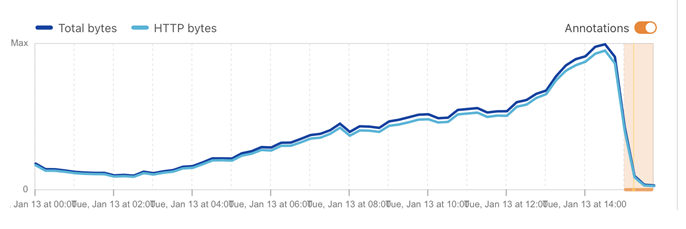
Cloudflare Radar data highlights a significant decrease in Uganda’s internet connectivity.
Data from Cloud Flare Radar as shown in the image above, confirms a significant decrease in network connectivity.
The shutdown comes just days after the Ministry of ICT and the UCC publicly denied plans for a blackout. This mirrors the 2021 general election, where a similar nationwide internet shutdown was imposed and lasted approximately five days.
Internet shutdowns in Africa have significantly increased in frequency and economic impact over the last five years. There is also a growing trend of “digital authoritarianism” where governments use shutdowns to control information during elections and protests. From 2016 through 2024, there were 193 internet shutdowns imposed across 41 African countries.
In 2025, several African countries including Tanzania, Ethiopia, Democratic Republic of Congo, Mozambique, Cameroon, Togo, Kenya, South Sudan, Guinea, Libya restricted internet access, primarily during periods of elections, unrest or protests.
KICTANet is closely monitoring the evolving situation in Uganda and strongly condemns the restrictions, which represent a significant regression for digital rights and democratic processes in the region. Access to the internet is a fundamental facilitator of the rights to freedom of expression, access to information, and peaceful assembly—all of which are critical during an election period. Imposing a blackout under the guise of national security not only stifles civic participation and electoral transparency but also disrupts essential services and livelihoods.
KICTANet calls upon the Ugandan authorities to immediately rescind the shutdown order and uphold their international human rights obligations to ensure a free, open, and secure internet for all citizens.