
Kenya is poised to lead Africa in the Fourth Industrial Revolution. At the heart of this ambition is the development of a National Policy on Artificial Intelligence (AI) and Emerging Technologies, designed not just as a regulatory framework but as an industrial strategy to secure Kenya’s status as the “Silicon Savannah
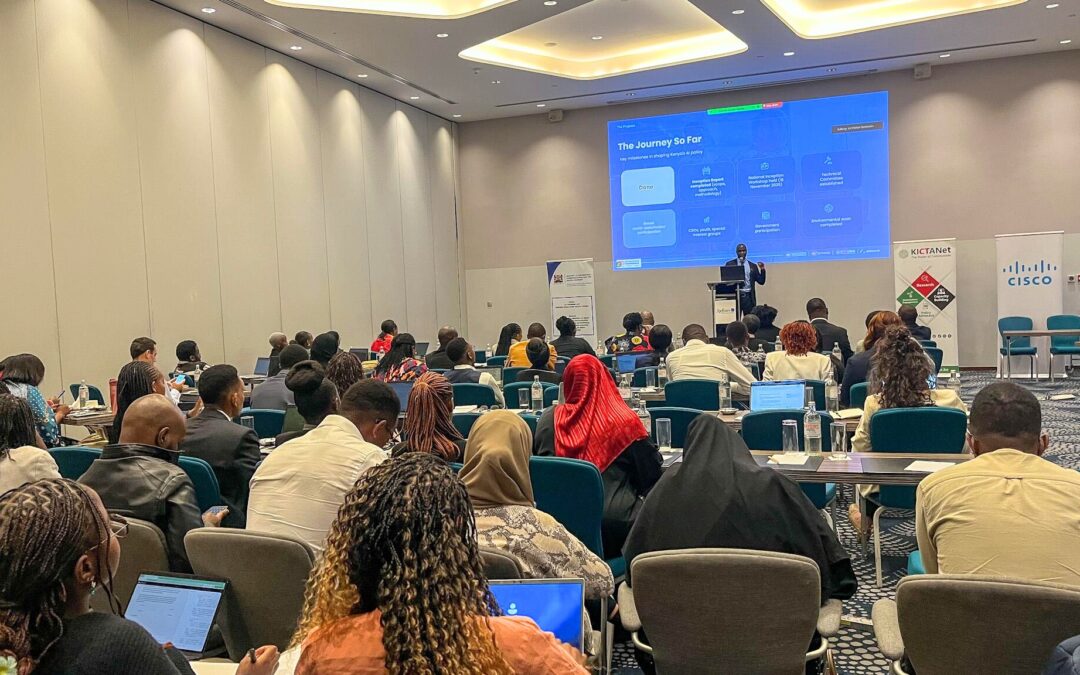
The AI and Emerging Technologies Policy Roundtable convened in Nairobi on Wednesday brought together government leaders, private sector innovators, and international partners to co-design this future. The pre-consolidation briefing session unanimously agreed that AI is no longer abstract. It is already transforming industries—from fintech and commerce to agriculture, health, and education—and Kenya must act boldly to harness its potential.
The policy development process is being spearheaded by the Ministry of Information, Communication and the Digital Economy (MICDE) with KICTANet as the lead implementing partner and supported by the British High Commission (BHC) in Nairobi through its governance and digital transformation portfolio. This support forms part of the broader UK–Kenya strategic partnership on responsible AI and emerging technologies, underscoring the UK’s commitment to advancing ethical, inclusive, and transparent AI governance frameworks across Africa.
Balancing Innovation with Governance
Ali Hussein, ChairpersonKICTANet Board of Trustees captured the urgency of aligning innovation with governance:
“Businesses require clarity and predictability, while society requires safeguards, trust, and accountability.”
This dual imperative anchors the policy’s ambition to balance innovation with responsible governance, positioning Kenya as a regional leader in ethical and competitive technology development.
UK Partnership: Clarity, Innovation, and Trust
Wilfred Oluoch of the British High Commission outlined three pillars for effective policy:
- Clarity to ensure predictable rules of engagement.
- Innovation enablement through sandboxes, partnerships, and collaboration.
- Public trust in data privacy, safety, and sovereignty.
“A good policy should have three things: clarity, to build confidence; enabling innovation, through sandboxes and partnerships; and trust, ensuring citizens are comfortable with data privacy, safety, compliance and sovereignty.”
Government Commitment: Aligning Public and Private Sector
Moloyce Esther, Senior ICT Officer Partnerships at the Ministry of Information, Communication and Digital Economy, emphasized collaboration:
“When the government and private sector sit together, Kenya moves in the right direction.”
Her remarks reinforced the government’s commitment to ensure Kenya leads Africa in AI regulation, while ensuring that policy development is inclusive and sustained.
Building Capacity: Action Lab and Cisco Partnership
A milestone partnership between Action Lab and Cisco Networking Academy was announced to strengthen Kenya’s digital talent pipeline.
Pauline Kanana of Action Lab stressed: “Policy ambition must be matched by practical capacity. That means the talents, the institutions and the delivery pathway need to be responsible when it comes to the adoption of AI.”
Cisco Country Manager Shane Rahim added:
“We strive to equip Kenyan youth with the skills needed for jobs of tomorrow… building a future-ready workforce that can contribute to Kenya’s technological advancement and global competitiveness.”
This partnership reflects the Talent and Labor pillar of the concept note, addressing brain drain and ensuring Kenya retains and grows its AI talent base.
Momentum Across Sectors
Ambassador Philip Thigo, Presidential Advisor on Digital Transformation, highlighted a week of landmark agreements, including:
- A partnership with Italy to provide Kenyan researchers access to advanced compute capacity.
- A satellite data collaboration with NASA and 25 organizations to strengthen agriculture systems.
- A $50 million venture capital fund to support startups via Nairobi’s International Finance Center.
- Cybersecurity initiatives with Cisco and AI Hub Africa.
- Digital education partnerships with Microsoft and GitHub to enhance teacher capacity.
These partnerships directly address the Infrastructure and Compute and Data as an Asset pillars of the roundtable concept note, lowering barriers to innovation and enabling cross-border collaboration.
Kenya’s AI Future: Knowledge, Jobs, and Sovereignty
Thigo laid out a vision for how AI can reshape Kenya by 2030:
“No country can develop beyond its knowledge capacity… you cannot be leading in the age of intelligence without knowledge, capacity and capability.”
“I don’t want us to be saying that AI took jobs. I want us to be saying that despite artificial intelligence, we created jobs.”
On inclusivity:
“If by 2030 this tribe has expanded… that we have new faces, a new group of folks who understand the capabilities and benefit of technology and actually apply it in their sector, then we will have succeeded.”
On sovereignty:
“Talent will remain your biggest sovereign capability… models will only make sense if it’s local talent that is training them.”
“We do not want to be a user. We want to be a creator and a collaborator as we go forward.”
Ambassador Thigo reinforced Kenya’s sustainability commitment:
“We are also a country that has decided by design that our AI will be green by default—AI for green and green artificial intelligence—so AI that delivers sustainability but also ensures we continue to develop within planetary boundaries.”
The Call to Innovators
Thigo’s closing words were a challenge to Kenya’s tech community:
“We need innovators who are dollar millionaires, at least in this era of digitization. You can’t do this thing and not be honest.”
For him, AI must deliver real economic value: creating wealth, jobs, and opportunities for young people.
Policy as Industrial Strategy
The roundtable was not just about regulation, it was about industrial strategy. By focusing on ease of doing business, infrastructure, data governance, and talent development, Kenya is building a framework that lowers the cost of innovation, attracts foreign direct investment, and secures its place as Africa’s digital leader.