
By Akoth Ocholla
As an advocate for social justice, I appreciate the intricacies that lie beneath the process of developing a policy in Kenya. But the brutal truth is that the policymaking process in Kenya is marred with widespread political apathy from the majority of the population and a lack of political goodwill from the leaders mandated with governance and policy development.
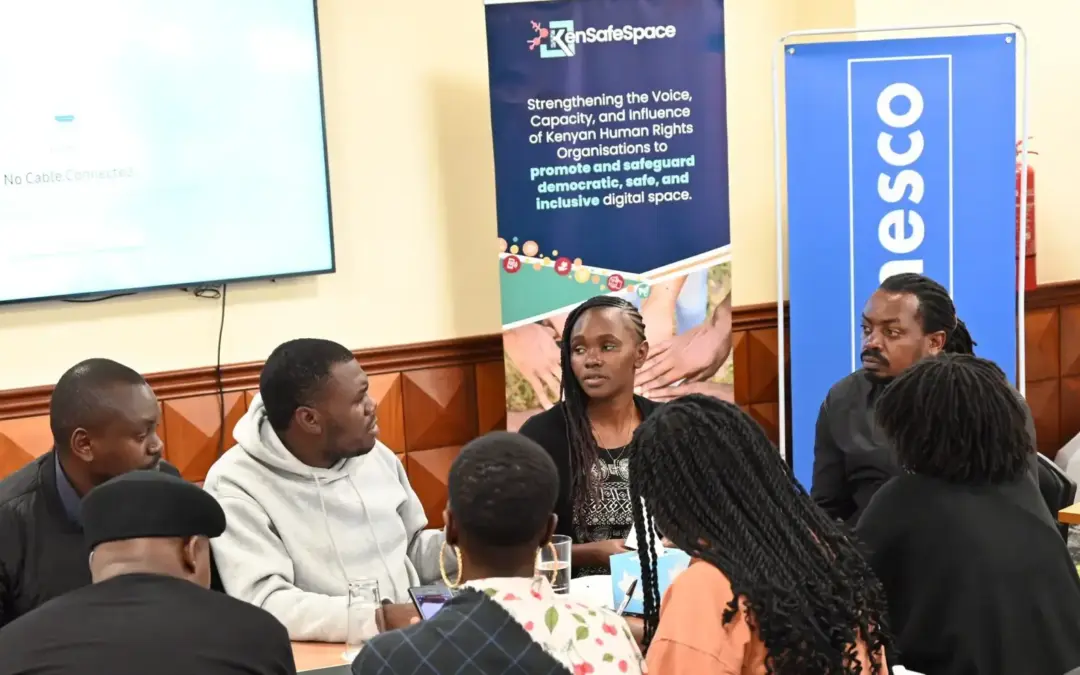
In early May, I participated in the SM4P (Phase II) and KenSafeSpaces workshop “Safeguarding the Digital space in Kenya,” convened by KICTANet in collaboration with UNESCO, Internews, and FeCoMo. One session that stood out the most for me from the three-day workshop was the ICT Policy–Making Process in Kenya. It stretched my understanding of the evolving digital ecosystem.
The dynamic digital ecosystem continues to present new challenges such as cyberbullying, misinformation, disinformation, hate speech and online exploitation. Kenya, in recent years, has experienced increased online harm that has negatively disrupted democracy and the protection of human rights.
In July 2021, KICTANet published a Public Participation Report on ICT Policy Making Processes in Kenya that specifically targeted the ICT Policy (2019), the Cybercrimes Act (2018), and the Data Protection Act (2019). The assessment of the processes revealed a lack of a comprehensive and inclusive public participation framework. Subsequently, the Public Participation Bill, 2024 was introduced; although it has yet to be enacted into law, it promises structured mechanisms for citizen involvement in governance.
As we wait for the bill to gain ground, we can all agree that currently, in Kenya, young people are the most active users of digital platforms. Despite that, it has been demonstrated that they feel excluded from policy discussions and legislative processes. This is mainly because they have limited awareness of digital rights and perceive these processes as opaque or irrelevant to their daily lives.
On the other hand, policymakers fail to champion progressive digital rights if it does not offer immediate political returns. As a result, digital rights challenges are understated in policy conversations, deepening the cycle of inequalities and undermining the potential for an inclusive digital future.
As the Kwa Wote Initiative, our efforts in promoting effective civic engagement were challenged. But this also made us question whether the average mwananchi is bothered enough to engage at all. Because the fact remains that policy instruments will never be as interesting to engage with as the TikTok clips and YouTube shorts that keep us up late at night. It calls for us to unlock another level of civic responsibility, to first, nurture the desire to know what these legal documents entail and secondly, engage by asking questions and making proposals to respective legislative houses.
At Kwa Wote, we believe that every voice matters, and we are working hard to break this cycle in every stage of policymaking. We commit to fostering platforms where every voice is informed, empowered, and equipped to actively seek out and participate in policy conversations that affect their futures.
Akoth Ocholla is the Director at the Kwa Wote Initiative – Ours is to ensure that with the evolution of the digital ecosystem, every voice is represented in governance and policy-making processes.