
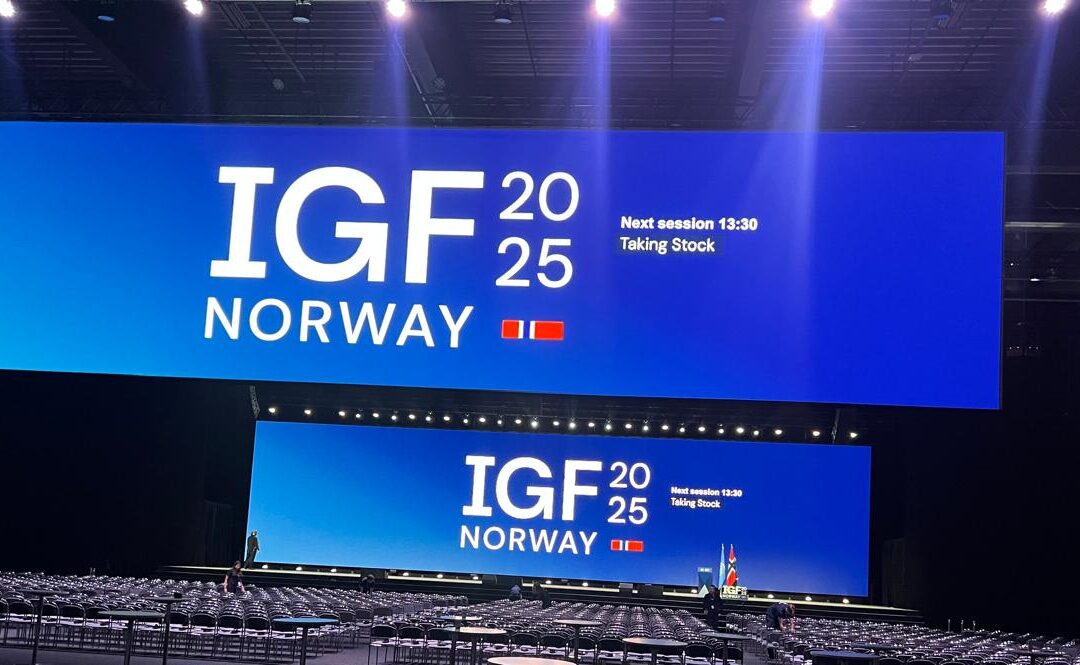
As part of the Civil Society Alliance for Digital Enhancement (CADE), KICTANet joined forces with partners including DiploFoundation, the European Center for Non-for-Profit Law (ECNL), Forum International des Plateformes nationales d’ONG (Forus), CIPESA, Sarvodaya-Fusion, Social Media Exchange (SMEX), Pacific Islands Chapter of the Internet Society (PICISOC), and Fundación Karisma (Karisma). Together, we had a productive catch-up to support and advance IGF principles among civil society organizations (CSOs) worldwide.
CADE led an engaging session titled “Tower of Babel,” facilitated by Ginger Paque, which explored the question: What is the language of the internet? The session highlighted the challenges and chaos that can arise when everyone speaks in their native language. As part of the discussion, we asked: What is Internet governance in Swahili? “Utawala wa Mtandao ni ukuzaji na utekelezaji wa kanuni, taratibu, sheria, hatua za maamuzi, na mipango ya pamoja inayoundwa na serikali, sekta binafsi, na jamii ya kiraia, kila mmoja katika nafasi yake, ambazo huathiri mwelekeo na matumizi ya mtandao.” – an attemp to interpret the WGIG definition of the IGF into Swahili.
KICTANet’s CEO, Dr. Grace Githaiga, shared perspectives from the Kenya Internet Governance Forum (KIGF) during the National, Regional, and Youth IGF Initiatives (NRIs) session. Kenya has successfully run its national IGF for the past 18 years. Key lessons learned include that Multistakeholderism works – bringing together diverse voices leads to better outcomes; Capacity building brings fresh voices – empowering new participants strengthens the process; KIGF is adaptable—the initiative has continued despite challenges such as the COVID-19 pandemic, political unrest, and protests.
Ambassador Ekitela Lokaale, Kenya’s Permanent Representative to the United Nations in New York and co-facilitator for WSIS+20. Ambassador Lokaale assured the IGF community of his commitment to ensuring that the outcomes of WSIS+20 and the renewal of the IGF mandate reflect the views of all stakeholders. We reaffirmed our commitment to actively contribute to the WSIS+20 process, striving for outcomes that represent the aspirations of the global majority, promote equitable access, uphold digital rights, and advance sustainable digital transformation for all.
WSIS+20 refers to the 20-year review of the World Summit on the Information Society (WSIS), a United Nations-led process that began with two major summits: Geneva in 2003 and Tunis in 2005. The original WSIS established a global vision for building a “people-centered, inclusive, and development-oriented information society” where everyone can create, access, utilize, and share information and knowledge, while promoting sustainable development and upholding human rights. The WSIS+20 High-Level Event will take place in July 2025 in Geneva, Switzerland.
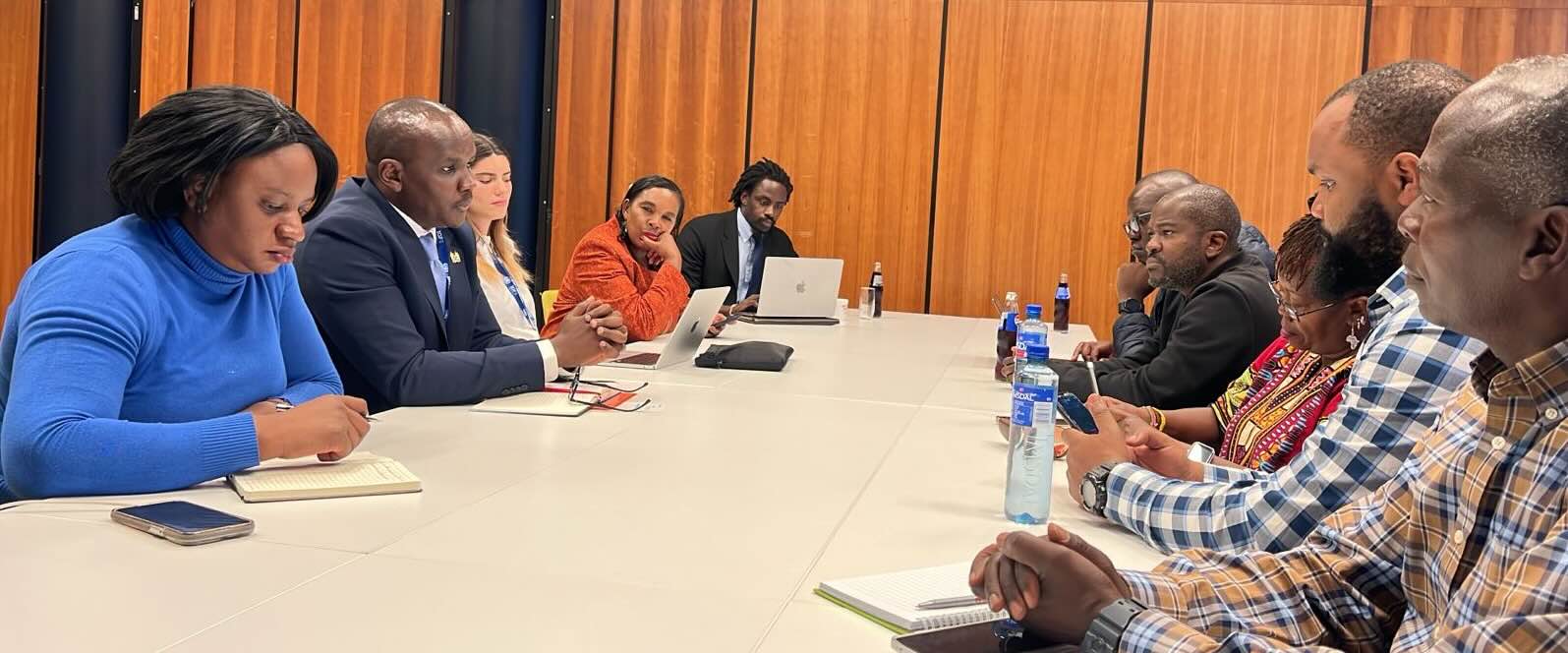
Ambassador Ekitela Lokaale, Kenya’s Permanent Representative to the United Nations in New York and co-facilitator for WSIS+20.
The IGF renewal took center stage at the IGF. Nearly all the sessions had participants call for either the IGF to be renewed, while others called for a permanent mandate. The IGF offers significant benefits that justify its ongoing existence and mandate renewal.
-
Inclusive Multistakeholder Dialogue: The IGF is unique in providing an open, global platform where governments, civil society, the private sector, technical experts, and international organizations can all participate in shaping internet governance policies. This inclusive approach ensures that decisions are not made in isolation but reflect a wide range of perspectives and interests.
-
Catalyst for Policy Development: The IGF serves as a crucible for developing principles, best practices, and policy recommendations. It facilitates open and transparent conversations that help shape global norms for cybersecurity, data privacy, digital rights, and more.
-
Knowledge Sharing and Capacity Building: Annual IGF meetings and collaborative working groups enable the exchange of information, experiences, and good practices. This helps bridge gaps in knowledge and capacity, particularly for developing countries and marginalized groups.
-
Global Network and Partnerships: The IGF fosters new partnerships and coalitions among diverse stakeholders. It acts as a hub for networking, enabling cooperation on issues that require collective action, such as internet security and digital inclusion.
-
Platform for Emerging Issues: The IGF is responsive to new challenges in the digital ecosystem, providing a space to identify and discuss emerging issues before they become crises. This proactive approach helps the global community stay ahead of rapid technological changes.
-
Promotion of Open, Secure, and Inclusive Internet:
The IGF consistently advocates for an internet that is open, secure, stable, and inclusive. It emphasizes the protection of human rights online, bridging the digital divide, and ensuring that no one is left behind in the digital economy.
Despite the benefits, the WSIS+20 must address the criticisms of the IGF process. These criticisms highlight ongoing debates about the IGF’s effectiveness and relevance in shaping the future of internet governance.
-
Lack of Decision-Making Authority: The IGF is designed as a non-binding, multistakeholder dialogue platform, which means it cannot create or enforce binding policies. This limits its influence, as discussions often do not translate into concrete actions or outcomes.
-
Limited Inclusivity and Representation: Despite its commitment to inclusivity, the IGF struggles with unequal participation. Developing countries, marginalized groups, and smaller organizations often face barriers such as limited financial resources, visa challenges, technical expertise, or representation, making it difficult for them to contribute meaningfully.
-
Transparency and Accountability Concerns: The selection process for key IGF bodies, such as the Multistakeholder Advisory Group (MAG), has been criticized for being opaque. Some decisions appear to be made by unnamed UN officials rather than through open, representative processes, which undermines the IGF’s image as a truly multistakeholder forum.
-
Avoidance of Controversial Topics: The IGF has been criticized for steering clear of contentious geopolitical issues, such as tensions between major powers (e.g., US-China tech rivalry) or debates over state censorship. This avoidance has led some to question whether the IGF is addressing the most pressing and relevant governance challenges.
-
Fragmentation and Coordination Challenges: The global internet governance landscape is crowded, with many organizations and forums involved. The IGF’s inability to coordinate effectively with other bodies can result in conflicting approaches and a lack of a unified global agenda.
-
Absence of Formal Outcome Documents: The lack of concrete, actionable recommendations or formal outcome documents from IGF meetings has been a persistent criticism, as it limits the forum’s impact on policy development and implementation.
It is clear from the benefits that the IGf mandate should be renewed, or even be made permanent, as some quarters have been proposing. Some of the clear reasons why the IGF should be renewed are that it
-
Prevents Fragmentation: As geopolitical tensions rise and digital technologies evolve, there is a risk of fragmentation, with powerful actors making decisions behind closed doors. The IGF’s open, multistakeholder model helps ensure that the internet remains a global, interoperable resource.
-
Strengthens Global Digital Cooperation: The IGF is the only global forum where all stakeholders can openly discuss internet governance and digital policy. It provides a vital space for building consensus, trust, and shared understanding among diverse actors.
- Supports Sustainable Development: By fostering inclusive access and equitable digital transformation, the IGF contributes to the broader goals of peace, sustainability, and socioeconomic development.
- Adapts and Evolves: The IGF has shown the ability to adapt to new challenges and incorporate feedback, as seen in its growing focus on producing tangible outputs and recommendations.
The weather in the Oslo–Lillestrøm region, where we were based, was said to be summery. The sun never truly set, hovering just above the horizon from midnight to 3 a.m. before rising again. There were moments when the sun was quite hot, but for someone from the equator, the summer here felt more like a chilly night during the rainy season in the highlands.
Oslo, Lillestrøm, and our nearby town of Lørenskog—overlooking the Snø skiing resort—are beautiful, well-organized, developed, and orderly. The city and its suburbs, with a population of about 1.6 million, are impressive. It is clear that the people here have built something truly remarkable for themselves.
The IGF 2025 in Lillestrøm, Norway, marked a significant milestone as the global community celebrated 20 years of the Internet Governance Forum. Key outcomes included:
-
Renewed Commitment to Multistakeholderism: The importance of inclusive, multistakeholder approaches in shaping the future of the internet was reaffirmed, with strong participation from civil society, governments, and the private sector.
-
Advancement of Digital Rights and Inclusion: Discussions emphasized the need to bridge digital divides, promote equitable access, and protect digital rights for all.
-
Capacity Building and Empowerment: The role of capacity building in enabling effective participation, especially from underrepresented regions and communities, was highlighted.
-
WSIS+20 and IGF Mandate Renewal: The forum provided a platform for advancing the WSIS+20 review process and ensuring that the renewal of the IGF mandate reflects the aspirations of a diverse, global community.
-
Strengthened Partnerships: Collaborations among organizations like KICTANet and its partners under the CADE project were strengthened, fostering greater cooperation and knowledge exchange.
Overall, IGF 2025 underscored the importance of global cooperation, adaptability, and inclusivity in shaping a digital future that benefits everyone.