
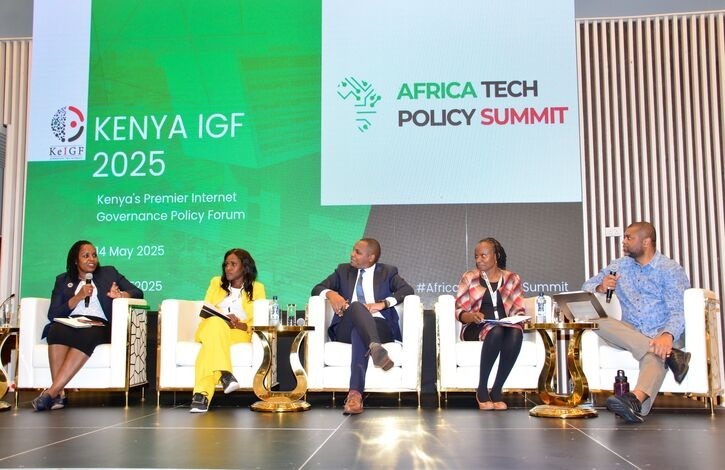
As part of its strategic plan 2025-2027, KICTANet advanced its mission to foster an open, inclusive, secure, and rights-based digital ecosystem through multi-stakeholder collaboration, operationalizing its four strategic pillars: Policy Advocacy, Research and Innovation, Capacity Development, and Multi-Stakeholder Engagement. The inaugural Africa Tech Policy Summit (AfTPS) 2025, demonstrated tangible outcomes for Africa’s ICT ecosystem.
KICTANet’s leadership in Policy Advocacy was exemplified by its convening of the Africa Tech Policy Summit (AfTPS) 2025 in Nairobi from May 12–16, which brought together over 600 stakeholders from government, private sector, civil society, academia, and the tech community. Under the theme “Tech for Human Development: Policy, Innovation, and Inclusive Governance,” the summit focused on harmonizing technology policies, fostering innovation, and ensuring inclusive digital growth across Africa. Key outcomes included actionable policy recommendations for regional and global tech governance and strengthened multi-stakeholder partnerships.
The summit’s outputs will inform Africa’s positions in global digital forums and support the continent’s leadership in shaping equitable, sustainable digital futures. KICTANet also led the Kenya Internet Governance Forum (KeIGF) and the Gig Economy Stakeholder Roundtable, ensuring diverse perspectives aimed at influencing national and continental policy agendas.
In Research and Innovation, KICTANet partnered with Key partners and collaborators who helped to inform policy dialogue on emerging issues such as AI, digital rights, and technology-facilitated gender-based violence. KICTANet’s research-driven approach underpinned advocacy for robust AI governance frameworks, ethical data practices, and modernization of digital statutes, ensuring that Kenya and Africa remain at the forefront of responsible digital innovation.
Capacity Development remains central to KICTANet’s strategy. The 10th edition of the Kenya School of Internet Governance (KeSIG) provided foundational training to a diverse cohort, with high completion rates and a strong emphasis on gender inclusion. KICTANet extended its reach to children and youth through the 6th Children’s Internet Governance Forum and the Africa Tech Policy Summit Youth Day, empowering the next generation with digital literacy, policy awareness, and leadership skills. Workshops on digital storytelling, advocacy, and online safety further ensured that all stakeholders—from grassroots communities to policymakers—are equipped to participate meaningfully in the digital ecosystem.
At the core of KICTANet’s approach is Multi-Stakeholder Engagement. Every major activity—including AfTPS, KeIGF, East Africa Internet Governance Forum (EAIGF), youth and children’s forums, and advocacy meetings—was designed to foster dialogue and collaboration across sectors. KICTANet facilitated continuous engagement through digital tools and formal partnerships, ensuring that policy development is inclusive, transparent, and reflective of the diverse needs of Kenyan and African society. This approach was impactful in initiatives such as the advocacy engagement on digital rights and the Universal Periodic Review (UPR) process, strengthening civil society coalitions and amplifying grassroots voices in both national and international policy arenas.
KICTANet’s inaugural AfTPS 2025 achievements were supported by partners including the UK Government’s Digital Access Programme, GIZ’s Digital Transformation Centre, Meta, Safaricom, AWS, APC, CIPESA, ICANN, Mzalendo Trust, Media Council of Kenya, KENIC, TESPOK, Paradigm Initiative, IGFSA, EU KensafeSpaces and CADE projects, Internet Society Foundation, Belva Digital, and Syokinet.
Access the link to the report: https://v2.panafcon.net/mdocs-posts/africa-tech-policy-summit-aftps-2025-report/