
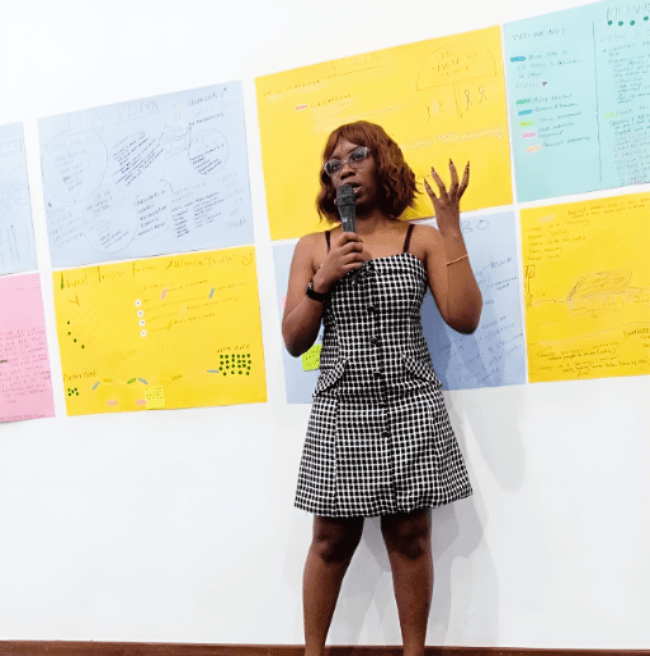
Recently, partners supported by the Our Voices, Our Futures (OVOF) Consortium in Kenya met for an end-line evaluation. The convening was a moment to pause, reflect, and celebrate the progress made in amplifying the voices and rights of structurally silenced women and gender-diverse individuals. I was honoured to attend this vibrant gathering. OVOF has supported KICTANet’s Women’s Digital Rights Program through a variety of dynamic strategies: direct advocacy, strategic use of technology, movement building, and creative approaches in arts, media, and culture.
Sharing Our Stories of Impact
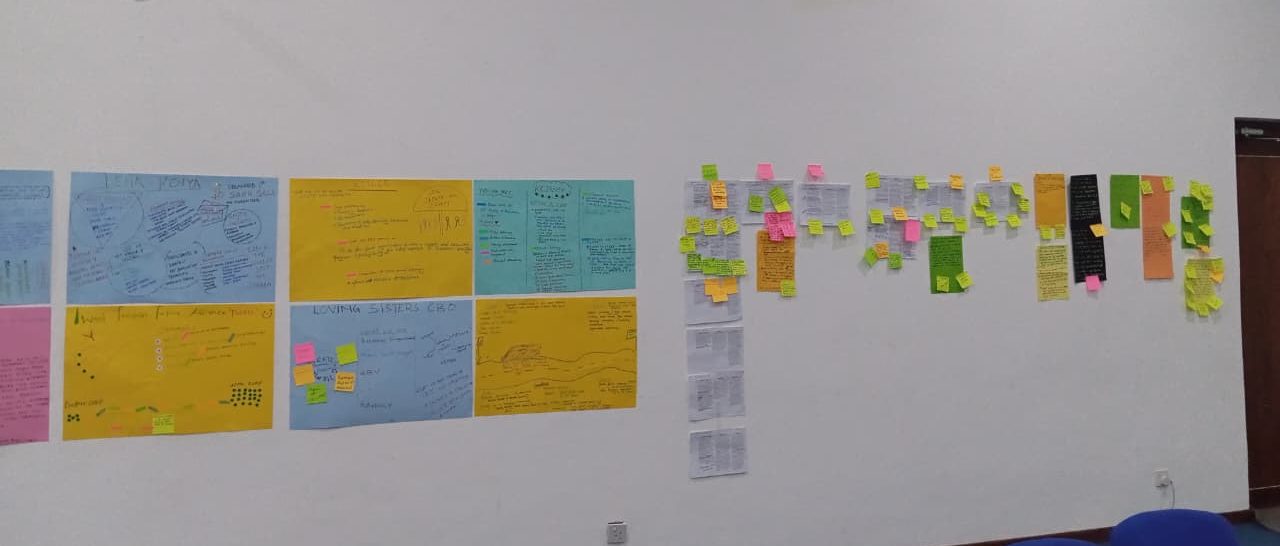
Over two days, 15 partner organisations shared their unique journeys and results from working with women and gender-diverse communities, many of whom face multiple intersecting challenges. To capture the wealth of experiences, we used an engaging approach called the Wall of Change. Here, we mapped our collective contributions toward OVOF’s goals, showcased stories of transformation, and identified priorities for the future.
What Funders Want to See
Beyond measuring what we’ve done, the evaluation introduced us to fresh ways of understanding how real change happens. The insight is not only for project reports, but for shaping stronger proposals and partnerships moving forward.
Our facilitator reminded us that donors and evaluators don’t just want to tally activities or outputs. What truly matters is showing how our efforts have shifted behaviours, influenced policies, or changed attitudes in meaningful ways.
We explored innovative approaches like:
- Outcome Harvesting: Looking back to identify actual changes that have occurred, even if unplanned.
- Realist Evaluation: A theory-driven approach that asks, how and why does an intervention work, for whom, and under what conditions?
Using real-life case studies from our projects and revisiting our theories of change, we pondered over the outcomes to provide a deeper understanding of not just what changed, but why it happened and under what circumstances.
Why This Matters Now
In an era of shrinking resources, these insights help partners design more effective programs and strengthen their competitiveness for future funding. For donors, it offers greater accountability and assurance that investments lead to sustainable, positive impact.
Ultimately, the lessons from Kenya’s OVOF partners will inform ongoing work across the consortium and offer valuable lessons to feminist movements and partners across the globe.