
Technology has immensely expanded our connectivity and opportunities. But as internet penetration and ICT use rapidly grow in Kenya and across Africa, so too do deeply concerning forms of technology-facilitated gender based violence (TFGBV).
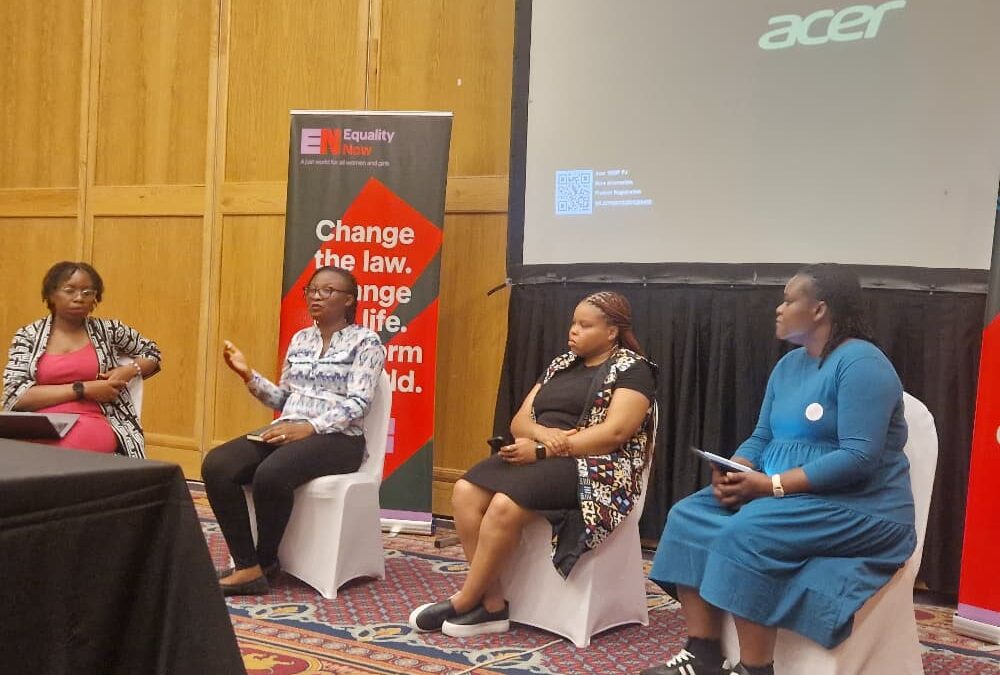
KICTANet was a key partner at a side event in Windhoek at the FIFA 2025, where experts and advocates gathered to share key evidence and chart pathways for systemic reform. The workshop was titled “From harm to justice: Reimagining digital safety for women and girls in Africa.”
Online Sexual Exploitation and Abuse: Surviving a Growing Form of TFGBV
Gender and Accessibility program assistant, Florence Awino, presented the findings from new collaborative research on online sexual exploitation and abuse across Kenya, informed by frontline survivor experiences and multi-country comparison with India and the United States.
The research reveals a stark picture: online sexual exploitation is widespread in Kenya, deeply entwined with long-standing gender inequalities and socio-economic challenges.
KICTANet presented that survivors face profound psychological harm, but lack adequate protection and targeted psychosocial support. Social stigma and economic hardships further silence survivors from seeking justice.
Notably, Kenyan laws such as the Sexual Offences Act, Counter Trafficking Act, and Cyber Crimes Act exist, but enforcement is weak due to institutional capacity gaps, entrenched corruption, and inadequate digital forensic skills.
Survivors often face lengthy judicial processes and lack confidence in the authorities. Technology platforms, which are increasingly implicated in facilitating abuse, consistently demonstrate low accountability and ineffective content moderation, especially since harmful content is often posted in local languages and undetected by AI moderation systems.

The panel discussion that followed highlighted the urgent need for comprehensive reforms. Clear legal definitions for emerging digital harms, such as deepfakes and image-based abuse, must be introduced into Kenya’s legal framework.
Platform regulation and transparent accountability mechanisms are critical. Survivors deserve expanded, tailored services including free legal aid, specialised psychosocial care, and safe, anonymous reporting channels that minimise risks of backlash.
Cross-sector Collaboration
Florence Awino emphasised that cross-sector collaboration is the foundation for progress. She added that feminist movements have pioneered principles for a safer, more equitable internet, centering survivor voices and emphasising gender-sensitive design and policies (The Feminist Principles of the Internet). However, governments and tech companies often fail to integrate these perspectives. Furthermore, Florence recommended that strengthening the capacity of law enforcement, prosecutors, and the judiciary through training on digital forensics and gender sensitivity can improve justice outcomes. She concluded that survivors must be actively involved in designing interventions to ensure solutions meet lived realities and avoid inadvertent harm.
Cross-Border Accountability in Africa
The discussion also expanded to the continental scale, exploring the cross-border nature of TFGBV. Cases often involve coordination between traffickers spanning countries and continents, with digital platforms being used for recruitment and exploitation. Regional enforcement frameworks remain fragmented, with limited mechanisms for pursuing justice across jurisdictions. The African Union Protocols, including the Maputo Protocol and the new Convention on the Elimination of Violence Against Women, provide useful legal bases, but adoption and enforcement remain limited. Panellists urged stronger regional cooperation and binding enforcement mechanisms to hold perpetrators accountable globally and to protect survivors.
Afro-feminist Evidence
A recurring theme was the crucial importance of Afro-feminist data and evidence in guiding advocacy. African perspectives often differ significantly from Western-centric definitions and research paradigms that dominate discourse on gender and technology abuse. Data collection, analysis, and policymaking must centre on African women’s lived experiences, embracing community voices and indigenous justice systems. This approach can better capture the nuances of harm and inform culturally relevant solutions.
Barriers at the Grassroots
At the grassroots level, significant barriers persist in reporting and referral pathways for survivors. Many women are unsure where to turn for help or what responses to expect. Existing services are often incoherent or concentrated in major urban centres like Nairobi, leaving rural survivors underserved. Panellists called for the development of consolidated, survivor-centred referral mechanisms that integrate law enforcement, judicial institutions, gender desks, civil society, and digital platform regulators. This would provide multiple avenues for reporting and support, reducing the burden on police stations ill-equipped for these cases.
Overall, the session concluded that strategies to combat TFGBV must be survivor-centred, Afro-feminist, and evidence-based. Advocacy must relentlessly push governments and tech companies to implement laws, build institutional capacity, enhance platform transparency, expand survivor services, and invest in digital literacy and stigma reduction campaigns. The internet can and should be a space where all African women and girls can participate safely, with dignity and justice. While the challenge is immense, the collaboration across feminist groups, digital rights organisations, governments, and survivors showcased at the workshop demonstrated that progress is possible.
https://v2.panafcon.net/voices-of-change-kictanets-community-impact-narratives/