
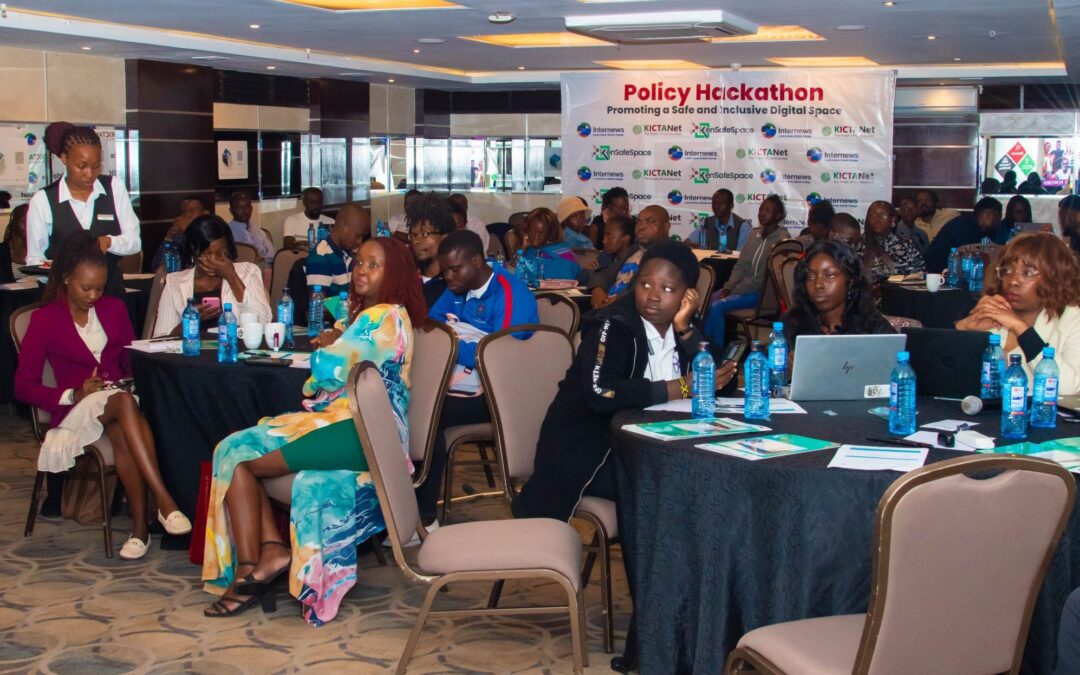
Kenya’s digital landscape is flourishing, yet it stands at a precarious crossroads. Recent years have seen digital platforms instrumentalized in ways that challenge democratic health, from AI-driven electoral manipulation to the rising tide of online abuse targeting women and youth. Simultaneously, the workers who power the global AI revolution and emerging technologies remain unprotected, with the digital promise continuing to exclude persons with disabilities and children.
On December 5th, 2025, we celebrated a groundbreaking event that highlighted the remarkable achievements of the KICTANet KenSafeSpace Policy Hackathon’s first round. Three innovative winners were awarded grants to bring their visionary ideas to life, propelling Kenya’s digital landscape forward. Alongside this exciting announcement, we proudly unveiled five essential policy briefs and studies designed to serve as blueprints for enhancing the country’s digital ecosystem.
These critical documents hold significant importance for Kenya, as they outline actionable strategies and recommendations that can strengthen digital governance and foster a more inclusive and secure online environment. This collaborative effort, facilitated by Internews, featured partnerships with the Data Labelers Association of Kenya (DLA), The Youth Cafe, AbleRise Africa Society, Tribeless Youth, and Watoto Watch Network, and represents a crucial step in transforming civil society innovation into impactful policies that will shape the future of Kenya’s digital landscape.
These reports are not theoretical exercises. They are immediate, evidence-based interventions against the most pressing digital rights crises of our time. They confront the systemic barriers head-on, offering clear pathways for a safer, more equitable, and more democratic digital Kenya.
The Policy Briefs
The KenSafeSpace Policy Hackathon Cohort 1 winners delivered policy briefs that demand legislative attention:
AbleRise Africa: Enhancing Digital Resilience for Persons with Disabilities in Kenya

Members of AbleRise Africa during the policy brief launch
The digital world remains largely inaccessible to Persons with Disabilities (PWDs), creating a massive human rights and economic drag. This highlight is not merely a social courtesy, but an economic imperative.
On this brief, AbleRise Africa starkly outlines the economic cost of excluding persons with disabilities from the digital space. It estimates that the productivity loss and higher unemployment for PWDs costs the country up to 6.95% of Kenya’s GDP, or KSh 1 trillion.
“This brief presents a compelling case for accelerating digital inclusion for persons with disabilities (PWDs) in Kenya. It highlights that the current digital divide is a human rights issue and a significant barrier to national development.”
The Youth Cafe: Cyber Rights Campus Connect – Youth Informed Policy Brief

Members of The Youth Cafe during the policy brief launch
According to The Youth Cafe, Kenya’s youth, the most digitally active demographic, find their cyber rights often compromised or unprotected by existing laws.
“Digital platforms were built to give young people a voice, but without proper safeguards, they can just as easily become tools of intimidation and abuse.”
This brief is therefore a direct appeal to lawmakers, calling for amendments to the Computer Misuse and Cybercrimes Act (CMCA), particularly concerning cyber harassment (Section 27) and distribution of intimate images (Section 37). It argues for a legal framework that is truly youth-informed, balancing security with the fundamental rights of freedom of expression and privacy.

Members of DLA during the policy brief launch
Platform workers, data labelers, and content moderators are the invisible backbone of the global digital economy; however, they are operating in precarious conditions with minimal protection.
“Platform and BPO workers in Kenya, particularly in data labeling, data annotation, and content moderation, are critical to the global digital economy, yet their working conditions are often precarious, lacking adequate protections for health,…”
The DLA offers a pioneering solution: a detailed, practical Voluntary Code of Conduct (CoC) and Model Contract. It provides a blueprint for ethical engagement, advocating for basic protections such as living wages, workplace safety, and essential mental health support for workers exposed to traumatic content.
The Digital Democracy Studies
In addition to the above three publications, the launch also witnessed the release of two powerful Digital Democracy Studies that promise to pull back the curtain on the subtle and overt threats to Kenya’s democratic future:

Members of Watoto Watch Network during the policy brief launch
Watoto Watch Network outlines that protecting children in the online space is a national priority, but the systems for reporting abuse, exploitation, and cyberbullying are failing. It confirms that a lack of platforms is not the issue. The real barriers are Social (stigma, distrust of institutions), Structural (fragmented policy and poor institutional coordination), and Technological (the digital divide). The focus must now shift to building trusted, accessible, and responsive reporting mechanisms.
Tribeless Youth: Artificial Intelligence, Electoral Behavior, and Ethnic Polarization in Kenya“Overall, the findings show that effective reporting is less about the number of available platforms and more about whether these platforms are trusted, child-friendly, well-coordinated, and backed by institutions capable of timely action.”

Members of Tribeless Youth during the policy brief launch
As Kenya approaches future elections, the sophisticated use of AI and digital platforms to spread disinformation and weaponize ethnic divisions poses a grave threat to peace and democracy. The Tribeless Youth study provides critical, real-time data on how political flashpoints are directly correlated with an alarming increase in online tribal rhetoric—with some sources indicating a 50% surge in such conversations. This research serves as a stark warning: without proactive regulation of AI-driven tools and social media during electoral cycles, the digital echo chamber will continue to undermine national cohesion.
“The online space is a digital echo of profound societal stress, where political flashpoints have sustained momentum, leading to a sharp rise in tribal rhetoric.”
A huge congratulations to all the organizations – AbleRise Africa, The Youth Cafe, Data Labelers Association of Kenya, Watoto Watch Network, and Tribeless Youth – for their dedication, expertise, and groundbreaking work. They have provided the nation with the essential maps needed to navigate the treacherous waters of the digital age. The work of building a safe, inclusive, and resilient digital Kenya starts now.