
Kenya’s digital ecosystem is evolving rapidly, but with opportunity comes risk. Online gender-based violence (OGBV), misinformation, and exclusion of vulnerable groups remain pressing challenges.
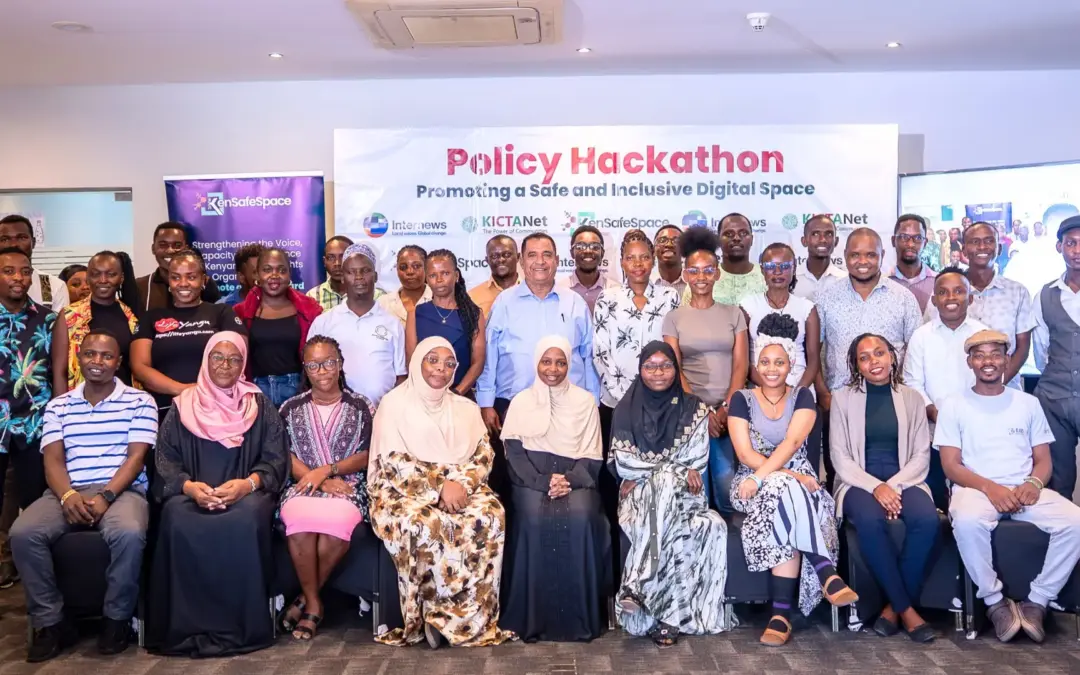
To address these issues, the Kenya Safe and Inclusive Digital Space (KenSafeSpace) Policy Hackathon has emerged as a flagship initiative empowering local civil society organizations (CSOs) and community-based organizations (CBOs) to co-create inclusive, rights-based digital policies.
Born out of the need to bridge the gap between high-level policy formulation and grassroots realities, the hackathon focuses on women’s online safety, prevention of OGBV, and the promotion of safe digital spaces.
Following the success of the inaugural event, the second hackathon convened in Mombasa city with a sharper focus: tackling specific societal challenges within Kenya’s digital ecosystem themed, “Co-Creating Safe and Inclusive Digital Spaces.”
The Winning Organizations and Their Projects
From a competitive pool of applicants, three organizations stood out with bold, practical solutions:
- Winner: Policy Action Initiative — Project: #NetSafi – Safeguarding Kenya’s Digital Democracy
- 1st Runner-Up: SEYA Youth Organization — Project: Civic Digital Inclusion Policy Lab
- 2nd Runner-Up: Y+ Kenya — Project: Youth Digital Safety Toolkit
Since their selection, these winners went through a 3-month intensive mentorship and technical guidance provided by KICTANet and Internews. This incubation phase enabled them to refine their ideas into actionable policy briefs, implement projects in their regions, and demonstrate tangible community impact.
Abraham Marita of Internews highlighted the Kenya Safe Space project, launched in 2024 to support digital rights activists and media organizations. Implemented in Nairobi, Mombasa, Kisumu, and Eldoret, the project focuses on digital rights, safety, media literacy, and countering online harms.
Two major policy hackathons held in Nairobi and Mombasa have produced five policy documents, now serving as advocacy tools for human rights‑based legislation in the digital space.
“Our goal is to create a safer, more inclusive digital environment where every Kenyan can thrive,” Marita emphasized.
Nicodemus Nyakundi of KICTANet emphasized disability inclusion, noting the importance of ensuring marginalized groups are represented in digital policy spaces. He highlighted the hackathon’s competitiveness — 141 applicants narrowed to 15 finalists, with three winners — and KICTANet’s role in building networks of digital safety advocates.
Policy Action Initiative: #NetSafi
Policy Action Initiative’s #NetSafi project directly confronts electoral misinformation and disinformation. By establishing Youth Digital Watch Cells in Kilifi, Mombasa, and Tana River, the initiative trained young people — many from Ajira Digital programs — to identify, fact-check, and report harmful content.

The project’s unexpected success came when Ajira Digital center managers endorsed the training module for integration into official Ajira programs. Building on this, Policy Action Initiative developed a National Roadmap for Countering Electoral Disinformation, structured around five pillars: prevention and resilience, detection and early warning, response and accountability, transparency, and inclusion.
“We want to institutionalize youth digital watch cells in every county in Kenya,” Brian Kithinji, the Founder and Executive Director of Policy Action Initiative emphasized, underscoring the urgency of preparing ahead of Kenya’s 2027 general elections.
SEYA Youth Organization: Disability Data and Digital Inclusion
SEYA Youth Organization brought a disability lens to the hackathon. Using Kenya’s 2019 census data, they highlighted that 2.2% of the population, about 1.045 million people, live with disabilities, averaging 22,234 young people per county.

Their policy brief examined gaps in the Data Protection Act (2019), noting that while it establishes rights and safeguards for all citizens, youth with disabilities face unique challenges in its implementation. Through bi-weekly mentorship with Internews, SEYA escalated their brief from county-level advocacy to national-level reforms.
“Our three-month pilot program was a complete success. We are now working to sustain these initiatives and push for policy reforms that truly include youth with disabilities,” SEYA Youth Organization stated.
Y+ Kenya: Youth Digital Safety Toolkit
Y+ Kenya focused on safeguarding young people online. Their Youth Digital Safety Toolkit was co-created with youth from diverse backgrounds, including adolescents, young women, and key populations.

The toolkit addresses:
- Threats: cyberbullying, harassment, data misuse, misinformation, and scams.
- Rights: privacy, dignity, freedom of expression, safety, access to information, and non-discrimination.
- Practical tips: strong passwords, two-factor authentication, privacy settings, and reporting mechanisms.
- Mental health: guidance on screen time, digital detox, and seeking help.
A key innovation was the creation of digital safety champions which include 30 trained youth tasked with educating peers, with a goal of reaching 400 more.
“This toolkit was created by young people, for young people. It reflects their lived experiences and offers practical solutions to navigate the digital space safely,” Y+ Kenya noted.
NCBP and County Government Voices: Institutional Support
The National Council for Persons with Disabilities (NCBP) represented by Ms Juliet Ruwa, County Disability Officer, Mombasa County emphasized the importance of inclusivity, noting that youth with disabilities are often excluded from programs due to costs like sign language interpretation.
“Inclusive digital spaces will really help us when we understand them well, when we know what is right and what is wrong in these spaces,” one Ruwa stressed.
From the County Government of Mombasa Access to Information Officer Mohammed Bates highlighted the role of local governance in dissemination. With 150 village administrators and 30 ward administrators, Mombasa has the infrastructure to serve as digital champions. Bates committed to ensuring sign interpreters and accessible formats( Braille, audio) are included in future county engagements.
“The future is with the digital space. With your support, we will reach that level,” Bates affirmed.
Key Objectives of the Launch
The launch of these policy briefs aims to:
- Showcase community-led innovations addressing online safety, OGBV, and digital inclusion.
- Facilitate dialogue between grassroots innovators, policymakers, and digital rights stakeholders.
- Demonstrate the impact of the KenSafeSpace mentorship model in transforming raw ideas into implemented projects.
Expected Outcomes
- Increased awareness and adoption of policy recommendations on misinformation, digital inclusion, and youth safety.
- Strengthened networks between grassroots CBOs and national policy actors.
- A clear roadmap for scaling solutions and integrating findings into national digital safety strategies.
The KenSafeSpace Policy Hackathon demonstrates how grassroots innovation can reshape Kenya’s digital future. By empowering local organizations, mentoring them through KICTANet and Internews, and amplifying their voices at national level, the initiative bridges the gap between policy and lived realities.