
EDACR Impact Snapshot
Enhanced Digital Access And Community Resilience
- 3,000 youth empowered in digital skills, securing jobs in IT, agriculture & gig economy.
- 7,000+ VSLA members strengthened
- 6,000+ Community Digital Champions (CDCs) – cascading digital literacy & entrepreneurship skills at the grassroots.
- Community Digital Entrepreneurs (CDEs)
- Inclusive service delivery in adoption of gender-sensitive digital inclusion strategies for sustainable growth.
KICTANet, in partnership with the UK Government’s Digital Access Programme has launched the Enhanced Digital Access And Community Resilience (EDACR) project to transform at leastIt ie 200,000 lives across eight Arid and Semi-Arid Land (ASAL) counties: Wajir, Mandera, Garissa, Tana River, Samburu, Turkana, Marsabit, and Isiolo.
The EDACR programme is a six-month initiative funded by the British High Commission in Nairobi through the FCDO Digital Access Programme (DAP).
This initiative is designed to ensure that every citizen, especially women, youth, and marginalized groups can benefit from Kenya’s digital transformation. By combining digital skills training, financial empowerment, and community-driven innovation, EDACR will deliver lasting impact at the grassroots level.
Through EDACR, thousands of young people will be equipped with market-driven digital skills that enable them to secure sustainable employment in technology-enabled sectors such as digital agriculture, IT services, the creative economy, and the gig economy. At least 3,000 youth, 60 percent of them women, are expected to benefit directly, increasing their earnings and creating new opportunities for entrepreneurship.
At the heart of the project are Community Digital Champions (CDCs), who will cascade digital and entrepreneurship skills at the grassroots level. Selected CDCs will graduate into Community Digital Entrepreneurs (CDEs), equipped with advanced skills to drive innovation and local enterprise. This approach ensures that digital knowledge is not only shared but also sustained within communities.
The project also strengthens Village Savings and Loans Associations (VSLAs), groups of 15 to 30 members formed for social and economic empowerment. VSLAs will be transformed into one-stop hubs for digital, financial, and agribusiness services, expanding access to financial tools, market linkages, and business coaching. This will help citizens improve their livelihoods, strengthen resilience, and build sustainable community enterprises.
In addition, EDACR will embed inclusive and gender-sensitive digital service models within local systems, ensuring that counties and institutions adopt strategies that make digital inclusion a cornerstone of governance and development. By leveraging partnerships with cooperatives, financial institutions, and technology providers, the project will institutionalize digital service delivery and expand access to essential services.
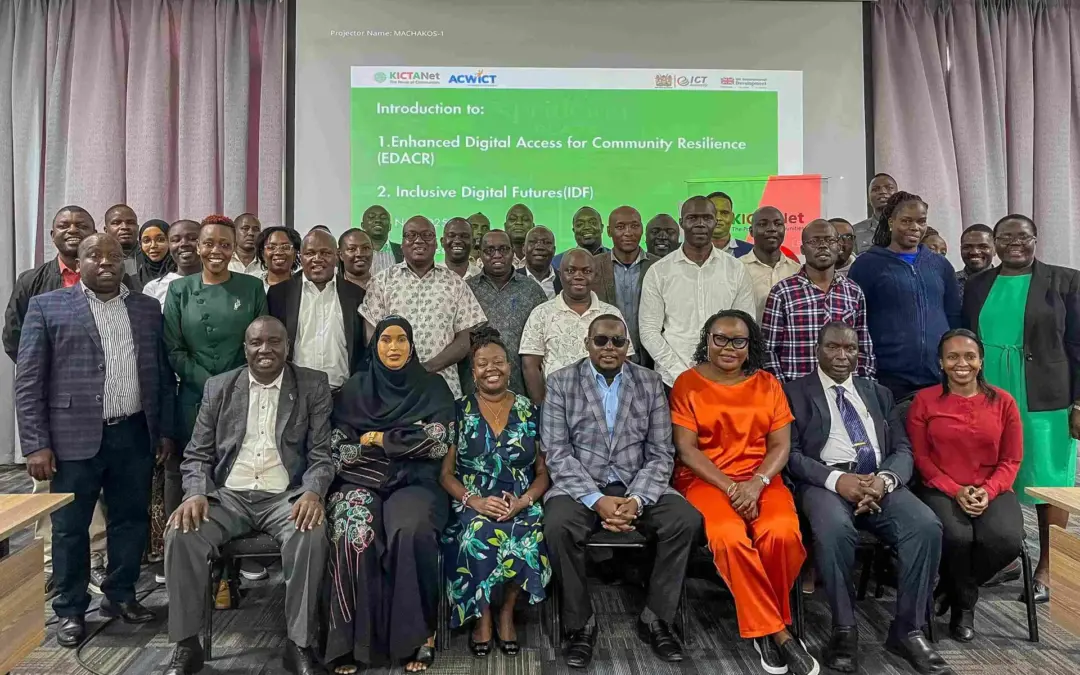
Speaking at the launch Inception and Sustainability Workshop for Two UK DAP Projects in 11 Counties in Kenya.
“EDACR is about more than technology; it is about people. By equipping communities with digital skills, strengthening VSLAs, and empowering youth, we are building resilience and ensuring that no one is left behind in Kenya’s digital transformation,” emphasised Dr Grace Githaiga CEO of KICTANet at the Inception and Sustainability Workshop for Two UK DAP Projects in 11 Counties in Kenya held Friday in Nairobi.
Through EDACR, more than 7,000 VSLA members and over 6,000 CDCs across the ASAL counties will directly benefit. Communities will gain the skills, confidence, and tools to participate fully in the digital economy, while local institutions will be better equipped to deliver inclusive services. This project represents a shared vision of equitable growth, resilience, and digital empowerment for all.
County Voices: Local Ownership and Sustainability
At the launch workshop, county representatives from across the eight ASAL regions spoke with conviction about the importance of embedding the EDACR programme into their systems and budgets to ensure sustainability.
- In Wajir, leaders underscored their commitment by allocating KES 600,000 as seed funding to scale digital skills. One official described the initiative as “a new baby we are ready to nurture,” pledging that the county would integrate EDACR into governance and policy frameworks so that it becomes a lasting pillar of development.
- From Mandera, the call was for stronger oversight and documentation of impact. Officials emphasized that success stories must be captured and shared widely, noting: “If we document our success stories and run them in our national media, other people will embrace our digital exercise.” This sentiment reflected a broader desire to inspire adoption nationally and ensure accountability at the grassroots level.
- In Garissa, representatives shared tangible examples of youth and students who had already benefited from digital training. They stressed the need for systematic documentation, saying: “We wish that success stories can be documented, because the government always says we have trained millions of citizens. We want to see those stories clearly captured.”
- Leaders from Tana River echoed the importance of integrating EDACR into county budgets and co‑creating with partners. They urged continued collaboration with ministries and development partners, adding: “The ministry should continue engaging us and bring more partners so that we can implement more at the grassroots level.”
- For Samburu, one of the new counties joining the programme, the tone was one of readiness and optimism. Officials affirmed that the initiative was not just aspirational but practical: “It’s not just a story told at the back of the tent—it’s doable. We are ready to embed digital inclusion into our county systems and budgets.”
- In Turkana, representatives highlighted the strong impact already seen from Community Digital Champions and youth engagement. They cautioned that sustainability must be prioritized beyond donor timelines, stating: “We have seen tangible impact. Now we want to ensure sustainability after the end of the programme.”
- Officials from Marsabit expressed gratitude for the progress made so far, while emphasizing the need for policy alignment and continued partner engagement. As one voice put it: “We are very appreciative of the work that has been done. Now we must include policy support to sustain the project.”
- Finally, in Isiolo, leaders committed to advancing capacity building and digital literacy while embedding EDACR into county structures. They stressed the importance of co‑creation and documentation, noting: “We will continue supporting the programme and embed it into our county structures. Success stories must be documented so that sustainability is clear.”
In addition, the Inclusive Digital Futures project was also introduced by Ms Constantine Obuya, CEO – African Centre for Women, Information and Communications Technology (ACWICT).
IDF seeks to transform rural communities of Busia, Elgeyo Marakwet, and Siaya by equipping young people (primarily women and persons with disabilities) with market-driven digital skills. This initiative aims to foster innovation, expand access to sustainable employment opportunities, reduce inequality, drive inclusive economic growth, and ultimately position Kenya as a significant contributor to global digital economies.