
By Faith Karori
Social media often feels like a wild ride, where connection and conflict coexist. What starts as a harmless comment/post can quickly spiral and turn into public shaming. Strangers attack, misinformation spreads, and reputations are destroyed. Even public figures, including former President Uhuru Kenyatta, stepped back from some platforms after facing online hostility. These experiences are not distant; they happen to people we know. To us.
The Rise of TFGBV in Kenya’s Digital Spaces
TFGBV, being a growing concern in Kenya’s digital spaces, continues to rise despite existing laws, with online harassment often targeting women and marginalized groups. A study by KICTANet found that 63 percent of women in urban areas and 37 percent in rural areas have faced some form of online abuse. The impacts are severe; emotional distress, job loss, damaged relationships, and social withdrawal are common outcomes. Survivors often remain silent because seeking help feels uncertain or unsafe.
Introducing Mlinzi: Kenya’s WhatsApp-Based Reporting Tool
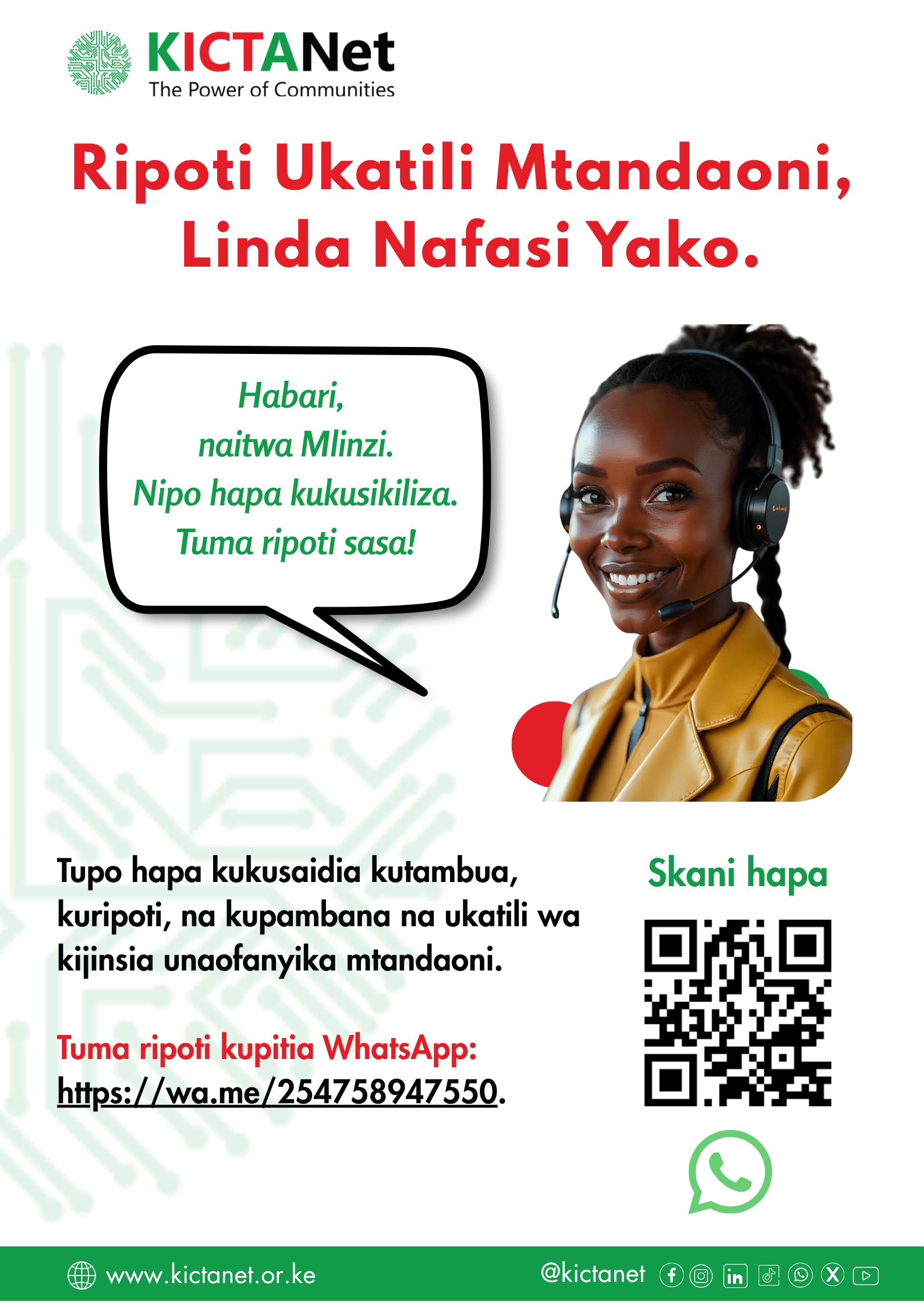
In response to this rising trend, a new tool has been introduced to help document and report online harm. The Check Tip Line, launched during the recent Roundtable and Community Engagement on TFGBV, allows users to report cases of cyberstalking, doxxing, non-consensual image sharing, trolling, harassment, political manipulation. The platform, known as Mlinzi, operates through WhatsApp at +254 758 947 550.
It guides users through documenting incidents and provides information on next steps. Reports can include screenshots or links, and the chatbot supports both English and Swahili for easier access. Unlike many global moderation systems that fail to recognize abuse in local dialects, Mlinzi incorporates Swahili lexicons developed with language experts. This feature helps it detect and categorize harmful content that might otherwise go unnoticed on mainstream platforms, making it better suited to Kenya’s linguistic and cultural context.
How It Works and Why It Matters
KICTANet reviews the reports, verifies them, and provides feedback. In some cases, users receive emotional support or advice on engaging law enforcement. Over 500 cases have already been documented through Mlinzi. The data collected is helping to build a clearer picture of how online harm occurs in Kenya, contributing to stronger policy advocacy and digital safety interventions.
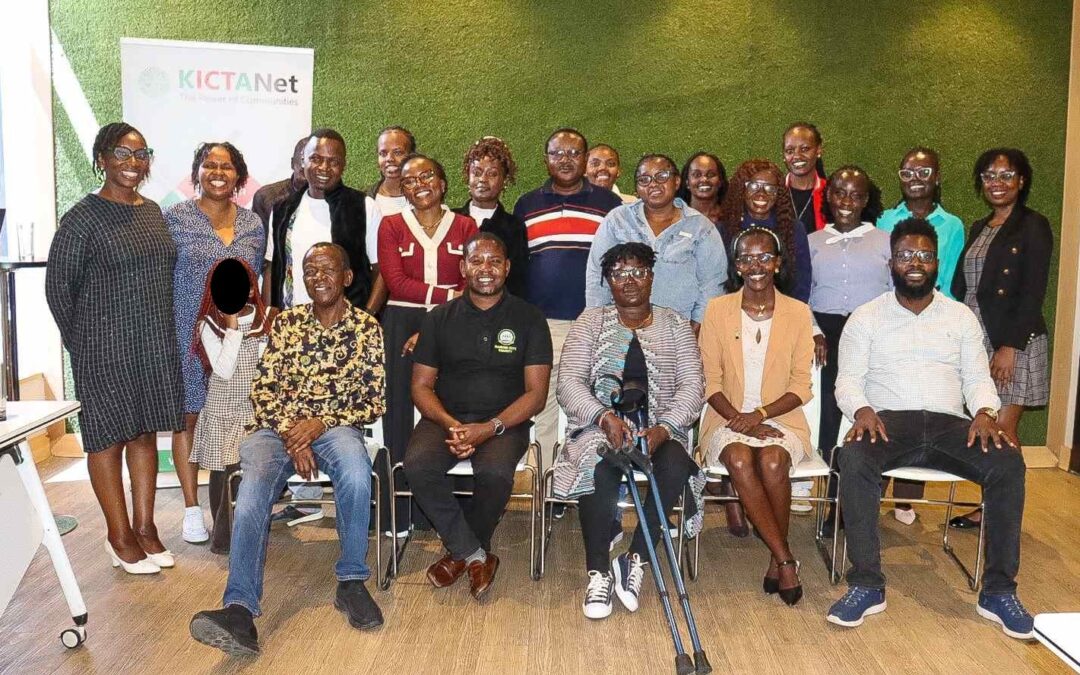
The conversation centered on the need for community participation and cross-sector collaboration to address TFGBV effectively. We discussed how current content moderation systems often overlook harmful posts written in local languages, allowing abuse to persist. There were calls for better integration of local dialects into moderation tools, stronger mental health and legal support for survivors, and wider public awareness of available reporting mechanisms. The dialogue also gave us space to share our experiences using the tool, raise challenges such as language complexity and accessibility, and offer practical feedback to improve its usability. The initiative, developed in partnership with Meedan, was highlighted as part of a broader effort to promote digital integrity and accountability in online spaces.
Why Mlinzi Is a Game-Changer
Mlinzi’s design reflects the reality that online harm is not just a personal issue but a social one. By providing a structured, private, and accessible channel for reporting, the platform empowers individuals to act when they witness or experience abuse. It also contributes to a growing national database that can inform policy, shape advocacy, and strengthen digital rights protections.
And there is something grounding here. If you have ever seen harm online and hesitated because you did not know what to do, you are not alone. Many people have felt that pause. The tip line offers a clear step. Save the number. Try a practice message. When something happens, you will know what to do because documentation turns isolated experiences into evidence. Evidence helps survivors feel seen.
Faith Karori is Program & Community Development Worker and Digital Rights Advocate