
By Valarie Waswa
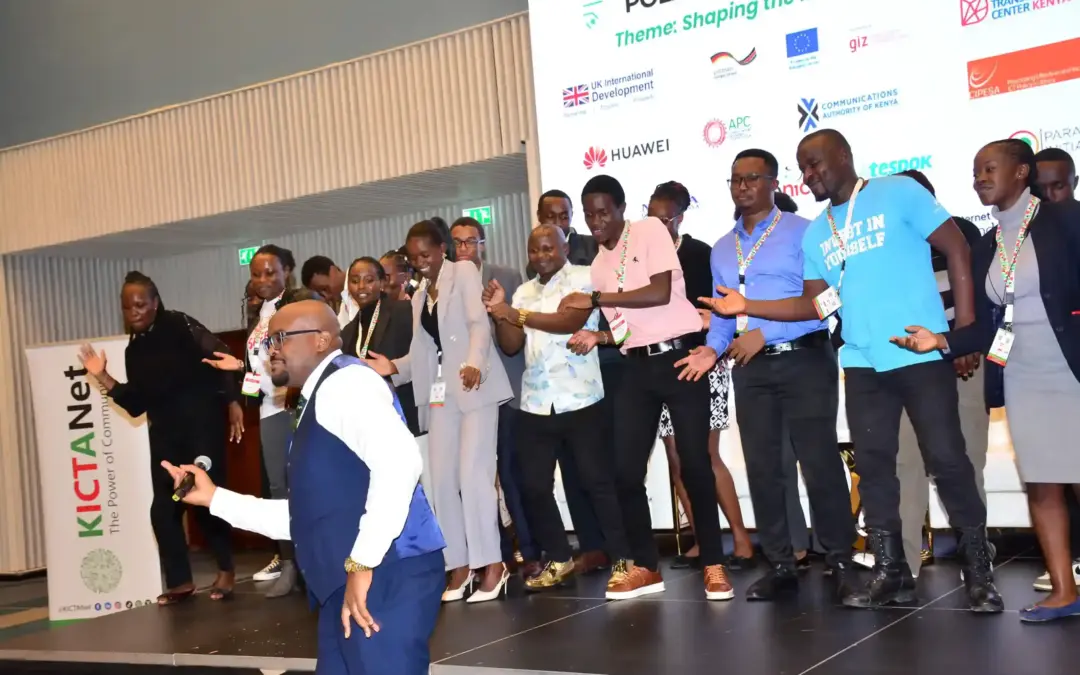
On Tuesday, 13th May 2025, Nairobi’s Sarova Stanley Hotel opened its doors to over a hundred young people for what would become one of the most energised and meaningful conversations on data, activism, and youth power this year in Kenya. Hosted by KICTANet as part of the Africa Tech Policy Summit Week, Youth Day 2025 wasn’t your usual sit-and-listen forum. It was a space of action, emotion, rhythm, policy, and most of all—youth ownership.
Throughout the day, young people didn’t just participate—they took over. They challenged the status quo, raised tough questions, and shaped real policy ideas through dialogue, creativity, and lived experience. From debates on the ethics of digital activism to conversations on internet governance and rights, the forum proved one thing clearly: young Kenyans are not waiting for permission to lead. They already are.
The Morning Session: Data Privacy, Power, and the Public Eye
The day kicked off with a town hall-style forum titled “Data Privacy & Public Interest – What’s the Balance?” The session tackled the complex intersection of online civic activism and the right to privacy, especially in light of the 2024 Gen Z-led Finance Bill protests. It was a conversation born out of lived experience—one where digital spaces were used not just to organise and resist, but also to name, call out, and in some cases, expose public officials.
Neema Mujesia, KICTANet’s Communications Officer opened with a presentation of the “Generational Shifts” report. Her presentation painted a vivid picture of how young people today use digital tools for civic engagement. But it also revealed the risks—online threats, digital surveillance, and institutional retaliation against youth voices. She challenged both state actors and digital rights advocates to reimagine what participation looks like in a digital democracy.
The panel that followed brought a full spectrum of insight. John Walubengo, Deputy Data Commissioner at the Office of the Data Protection Commissioner (ODPC), reminded the room that while privacy is constitutionally protected, it is not absolute. His remarks reflected the law’s attempt to draw a line between personal freedom and public interest. Boniface Mwangi, speaking from the heart and from years of lived activism, challenged that very line. He argued that “public interest” is often weaponised by state institutions to silence dissent and shield the powerful from accountability.
Sylvia Chelogoi, representing the Office of the Ombudsman, offered a valuable institutional perspective. She emphasised that oversight bodies like hers must remain vigilant—not just in defending the public’s right to information, but also in ensuring that public officials don’t use privacy laws to evade scrutiny. Her contribution made it clear that institutions like the ODPC and the Ombudsman are not just regulators; they are guardians of civic integrity.
Turning Ideas into Action: The Youth Co-Creation Session
Following the panel, the room transformed from a listening space into an action space. Music played gently in the background as participants moved between large charts placed across the room—each posing a key policy question.
Young people were asked: Where should we draw the line on privacy for public officials? How can we protect youth digital activists from harassment and surveillance? Should leaders be allowed to block citizens from accessing public updates on platforms like WhatsApp and Telegram? What does a fair, youth-centred data protection framework look like in a politically tense climate?
With sticky notes and marker pens in hand, participants wrote out their thoughts, ideas, and demands. Some scribbled personal experiences. Others offered bold policy recommendations. By the end of the activity, the walls were covered with the collective voice of a generation. This was no theoretical exercise—the responses gathered will form the backbone of an open letter to both the ODPC and the Office of the Ombudsman. For many, it was the first time they had ever participated in a public policy development process. And they owned it.
Afternoon Reflections: From Participation to Power at the Youth IGF
In the afternoon, the forum shifted gears as young people from across the region came together for the Kenya Youth Internet Governance Forum (Youth IGF) under the theme “From Participation to Power.” The session dove into the role of young people in shaping internet governance in Kenya and the wider East Africa region.
Discussions unpacked whether youth involvement in IG processes is meaningful or just symbolic. Speakers explored how digital inclusion can move beyond connectivity to encompass agency, equity, and decision-making power. Participants also discussed emerging issues such as ethical AI, the risks of data colonialism, and the need to build digital resilience for vulnerable groups.
The Youth IGF didn’t try to answer every question—but it created a space for those questions to be asked and taken seriously. What became clear was that young people are not looking to be included out of courtesy. They are demanding inclusion out of necessity. They’re not just digital natives—they are digital citizens with rights, responsibilities, and vision.
A Movement Moment
As the day wrapped up, it became clear that this wasn’t just an event. It was a movement moment. A gathering where young people redefined what it means to engage in policy-making, not as passive participants, but as architects of the future. The conversations held will ripple beyond the walls of Sarova Stanley—into open letters, advocacy campaigns, and future dialogues across Kenya’s digital governance space.
Youth Day at the Africa Tech Policy Summit was bold, unapologetic, and deeply rooted in lived experience. The youth who showed up didn’t just talk. They co-created. They called out. They listened. They challenged institutions, but they also extended their hands to work together.
If there’s one thing this Youth Day made clear, it’s that the next generation of policy-makers aren’t coming. They’re already here. And they’re ready.