
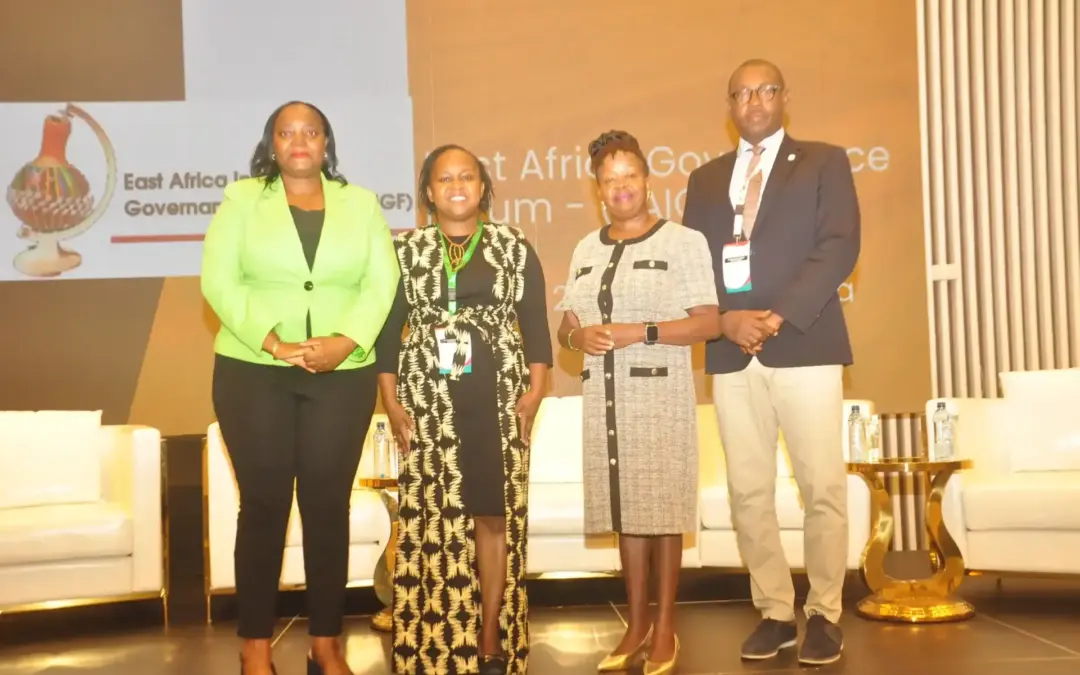
The 2025 East Africa Internet Governance Forum (EAIGF), hosted by KICTANet in partnership with the East Africa Community (EAC) and regional Internet Governance stakeholders, kicked off under the theme: “Advancing East Africa’s Digital Governance Together.”
The annual event, now in its 12th year, is a cornerstone for shaping the region’s digital future through inclusive, multi-stakeholder dialogue.
A Decade of Growth and Regional Impact
Rosemary Kimwatu, Chair of the EAIGF 2025 Multistakeholder Advisory Group (MAG), opened the forum by reflecting on the journey since the inaugural event in 2008.
“It is an absolute honor that today we’re marking 12 years of IGF since 2008 when we had our first one. I think we need to clap for ourselves,” Kimwatu said, highlighting the forum’s expansion from just three countries to a pan-East African initiative stretching “from the Indian Ocean to the Atlantic Ocean.”
Kimwatu emphasized the forum’s core objectives:
- Fostering robust multi-stakeholder dialogue on digital governance
- Promoting regional cooperation for digital transformation
- Addressing challenges and opportunities in the digital landscape
- Building capacity for meaningful participation in global Internet Governance spaces
- Aligning regional initiatives with the Sustainable Development Goals (SDGs)
- Enhancing digital literacy and skills
“Today, East Africa stands as a beacon of success in the global initiatives of the IGF process,” Kimwatu added, noting that the region has moved from struggling with basic connectivity to being “a closer and a more united East Africa as a result of the internet.”
Lilian Nalwoga, Head of ISOC Uganda Chapter and EAIGF Convenor, her remark,s focused on regional policy harmonisation efforts.
“Harmonizing digital policies across East Africa is not just a technical necessity but a strategic imperative to unlock regional digital economies and ensure equitable access for all citizens.”
Lilian detailed ongoing initiatives to align cybersecurity frameworks and data protection laws among member states, stressing the importance of collaborative policymaking to reduce fragmentation.
Tackling Infrastructure and Policy Gaps
Dr. Grace Githaiga, CEO of KICTANet, welcomed participants to the 12th edition of the EAIGF, which is part of the inaugural Africa Tech Policy Summit Week in Nairobi. She stressed the urgency for a unified digital governance ecosystem.
“East Africa is at a critical crossroads with accelerating technological innovation, growing regional integration and an increasingly digital population. The demand for inclusive and effective digital governance has never been greater.”
Despite progress, Dr Githaiga acknowledged persistent challenges: “We still face policy fragmentation, infrastructure gaps and growing concerns about digital rights, and now is the time for East African leaders to come together with the shared vision guided by our common values as a region.”
Eng. Daniel Murenzi, Principal Information Officer, East Africa Community focused on bridging infrastructure gaps.
“Infrastructure remains the backbone of digital transformation. Our work in expanding fibre optic networks and improving last-mile connectivity is critical to increasing internet penetration beyond the current 48%.”
He highlighted Rwanda’s success in rural broadband deployment as a model for neighbouring countries and called for increased public-private partnerships to scale infrastructure development.
Multi-Stakeholder Model: The Heart of Progress
Both Kimwatu and Githaiga underscored the importance of the multi-stakeholder model, which brings together government, the private sector, civil society, academia, and the technical community.
“The multi-stakeholder DNA that is an IGF process has led for each one of us to be a trusted voice in the internet governance space, and we have also created a safe space where we can have difficult conversations and agree to disagree,” Kimwatu said.
Youth and Digital Rights Take Center Stage
The summit featured vibrant side events, including a Gen Z dialogue with the Office of the Data Protection Commission, a Youth Day focused on internet governance, and workshops on digital rights and freedom of expression. Dr. Githaiga highlighted the importance of engaging young people.
“We had a Youth Day where, again, the young people discussed the Internet Governance Forum and how it affects them in the region.”
Ms. Anja Gengo, NRI Initiative Coordinator, UN IGF brought a passionate voice on digital freedoms and inclusion.
“Digital rights are human rights. Young people in East Africa are not just consumers of technology but active creators and defenders of digital spaces. Our voices must be central in shaping policies that protect freedom of expression and privacy.”
Anya shared insights from the Youth Day dialogues, emphasising the need for stronger data protection laws and awareness campaigns to empower young users.
Looking Ahead: Bridging the Digital Divide
With East Africa’s internet penetration at 48% compared to Europe’s 93%, Kimwatu called for continued investment in connectivity and harmonization of digital policies.
“The world has quickly moved in the decision space, but we have a chance, where we are, to do it right, and we have the privilege that is a fresh start.”
Regional Collaboration and Support
The event was made possible by support from organizations such as Meta, Paradigm Initiative, ISOC Foundation, Amazon Web Services, Safaricom, and the UK Government’s Digital Access Program, among others.
Dr. Githaiga concluded with a call to action:
“Your contributions help shape a digital future that is inclusive, secure and rights-based. We look forward to those discussions at a regional level about what’s affecting us, and how we continue to push for advocacy that will see the region continue to be a lead when it comes to digitalization.”
High-Level Panel: Advancing East Africa’s Digital Governance Together
Adam Lane, Huawei’s Government Affairs and Policy Director, “We operate in every country in the world, especially in Africa, where I think we’re one of the biggest players in infrastructure for telecoms, mobile, fixed networks, even mobile money solutions… Our work in expanding fibre optic networks and improving last-mile connectivity is critical.”
Lane discussed the importance of affordable, quality internet and the need for policy frameworks such as Kenya’s new building code.
“We worked a lot with the industry in Kenya to help mandate all new buildings have to be fibre ready… I also encourage those from other parts of the region to look at the building code that Kenya gazetted last May.”
He stressed moving beyond coverage to focus on affordability and quality of service.
“Now the focus needs to be on affordability and quality of service, not only on network coverage… We’re encouraging there to be better standards and targets for quality of service for all networks, not just mobile, but also fibre, satellite, and others.”
‘Gbenga Sesan, Executive Director, Paradigm Initiative noted that, “Inclusion is a human rights issue… If you look at what happened during COVID when people who didn’t have access were not in school, could not do business, you realize that anyone who is cut off is being denied a lot of things.”
Sesan emphasised the importance of inclusive growth and aligning digital governance with broader development goals.
“As we continue to talk about making progress with inclusion and we are measuring the numbers, we have to be careful not to measure growth just in terms of data, but in terms of real-life impact.”
Conclusion
The EAIGF 2025 reaffirmed East Africa’s commitment to digital unity, inclusive policy, and regional cooperation. The high-level panel called for practical solutions-such as harmonized building codes, affordable internet, and inclusive digital rights-to drive the region’s digital transformation.
Very good
We need give us jobs